




The Simple Fall Home Prep Checklist for a Calmer Season
There is a point every year when summer hasn’t completely left, but fall is clearly on its way.
The mornings feel cooler. The days get a little shorter. You reach for a sweater you haven’t seen in months, and suddenly the house starts asking for different things from you.
That’s usually when the mental list begins.
I need to put the outdoor cushions away. When did I last change the furnace filter? Are the gutters okay? Where did we put the flashlights? And didn’t I mean to deal with that draft by the back door last year?
A fall home maintenance checklist can quickly become one more overwhelming list of things you should be doing.
Instead, think of fall home prep as a seasonal reset—a chance to look ahead, take care of what matters, and prepare your home for the way you’re about to live in it.
You don’t need to do everything at once.
You simply need to know what needs your attention next.
Why Fall Home Prep Matters
Our homes change with the seasons, even when the rooms themselves stay exactly the same.
Windows that were open in June are closed in October. Heating systems that sat quietly all summer are suddenly working again. Entryways begin collecting jackets and wet shoes. Outdoor spaces are used less, while living rooms, kitchens, bedrooms, and cozy corners become more important.
That’s why fall preparation is about more than maintenance.
Yes, there are practical things worth checking before cold weather arrives. But there are also small changes that can make everyday life easier once it does.
Maintenance protects the house. A seasonal reset prepares the way you live in it.
And when you think about fall prep that way, the goal isn’t to finish an enormous list.
It’s to notice what your home will need next.

The Simple Fall Home Prep System
You could search for every possible fall maintenance task and end up with a list long enough to consume several weekends.
I’d rather simplify it.
Instead of asking only, What needs maintenance? we’re also asking, What is about to change about the way we live here?
Walk through your home using six categories:
OUTSIDE → SEAL → SERVICE → SAFETY → SWAP → STOCK
Some homes will need more attention in one category than another. That’s okay. This isn’t about completing identical tasks in every house.
It’s about creating a repeatable system that helps you remember what matters in your home.
1. OUTSIDE — Start While the Weather Is Still Good
If there are things to handle outside, do yourself a favor and look at them before the first truly cold weekend.
Start with a simple walk around your property.
You’re not trying to conduct a professional inspection. You’re looking for things that have changed, need attention, or will be much less pleasant to deal with once the weather turns.
Take a look at:
- Gutters and downspouts for visible debris or drainage problems.
- The roof from the ground for anything that looks damaged, loose, or unusual.
- Siding, trim, exterior caulking, and other visible surfaces.
- Areas where water tends to collect around the house.
- Outdoor faucets and hoses.
- Exterior lighting.
- Patio furniture, cushions, umbrellas, planters, and seasonal equipment.
- Anything outside that needs cleaning, repair, or protected storage before winter.
You don’t have to diagnose every problem you notice.
If something looks concerning or requires work you’re not equipped to handle safely, add it to the list and call someone who is.
A seasonal reset isn’t about becoming an expert in every system in your house.
It’s about paying attention.
The takeaway:
Start outside before the weather sends you inside.
2. SEAL — Keep Comfortable Air Where It Belongs
A tiny draft isn’t particularly memorable on a beautiful September afternoon.
On a 25-degree morning? You notice it.
Walk around your home’s exterior doors and windows and pay attention to places where air may be getting through. Look for worn or damaged weather stripping, obvious gaps, and areas where existing caulk appears cracked or deteriorated.
ENERGY STAR recommends checking areas around windows and doors for air leaks and provides several simple homeowner checks for identifying them.
This doesn’t mean every imperfect window suddenly becomes a major fall project.
The goal is to identify the small fixes you can make now and recognize the larger issues that may deserve attention later.
Sometimes improving how a home feels isn’t about a dramatic renovation.
It’s fixing the little thing you’ve walked past 100 times.
The takeaway:
Small gaps become much more noticeable on cold mornings.
3. SERVICE — Prepare the Systems You’ll Depend On
Your heating system is easy to ignore when it’s 75 degrees outside.
That’s exactly why fall is the right time to think about it.
ENERGY STAR recommends annual pre-season HVAC checkups and identifies fall as the appropriate time to have heating equipment checked before the heating season is fully underway.
Depending on your home and system, your fall check may include:
- Scheduling appropriate professional HVAC maintenance.
- Checking your HVAC filter and replacing or cleaning it according to the recommendations for your particular system and filter.
- Testing the thermostat.
- Turning on the heat before the first truly cold day to make sure everything is operating as expected.
- Checking that vents and registers aren’t unintentionally blocked by furniture, rugs, or stored items.
There’s an important distinction between checking something and servicing it.
You don’t need to become your own HVAC technician because you have a fall checklist.
Handle the simple homeowner tasks you’re comfortable with and leave professional maintenance and repairs to qualified professionals.
The point is simply not to make the first freezing night the first time you discover something isn’t working.
The takeaway:
Test the systems before the day you actually need them.
4. SAFETY — Check the Things You Hope You Never Need
Some household items quietly sit in the background doing an incredibly important job.
The change of seasons gives us a natural reminder to check them.
Use your seasonal reset as a reminder to test your home’s smoke alarms and carbon-monoxide alarms, then follow the manufacturer’s instructions for battery and unit replacement.
Check your household fire extinguisher, too, and make sure it’s accessible rather than buried behind everything else in a cabinet.
If you use a fireplace, wood stove, or other seasonal heating source, fall is also a good time to determine whether it needs appropriate inspection, cleaning, or professional service before you begin using it regularly.
And take a quick look outside.
As daylight hours shorten, are your walkways, entrances, steps, and frequently used outdoor areas adequately lit?
None of these jobs makes for a particularly glamorous fall afternoon.
But that’s part of caring for a home, too.
The takeaway:
Use the changing season to remember the safety checks that are easy to forget.

✨ Gretchen’s Tip
I’ve realized that I’ve done many of these things every fall without ever really having one fall routine.
Something gets done because I notice it. Something else gets done because the weather suddenly reminds me. And inevitably, there’s something I remember later than I should.
So I’m putting the list in writing.
Not because I need another schedule to manage, but because I don’t want to rely on remembering the same things year after year.
Once you create a seasonal checklist that actually fits your home, save it.
Next fall, you’re not starting over.
You’re simply resetting the house again.

5. SWAP — Prepare Your Home for How You’ll Live Next
This may be my favorite part of the entire reset because it has less to do with maintaining the house and more to do with living well inside it.
Every season changes what we reach for.
Summer might mean sandals by the door, pool bags in the mudroom, outdoor cushions on the patio, lighter bedding, and sunscreen everywhere.
Fall asks something different of those spaces.
Instead of simply adding fall items on top of everything from summer, take a few minutes to make the transition intentionally.
Think about the places that work harder when the weather changes.
At the entryway, make room for jackets, rain gear, boots, or whatever your household actually uses.
Put away summer equipment that’s no longer earning prime storage space.
Wash and store outdoor textiles properly rather than leaving them somewhere you’ll have to deal with later.
Bring cooler-weather bedding or throws forward when you begin needing them.
Move frequently used fall items somewhere accessible instead of digging for them every time the temperature drops.
And while you’re making the swap, edit a little.
If something came out of storage last spring and nobody used it all summer, ask yourself whether it really needs to go back into storage for another year.
You don’t need to turn this into a decluttering marathon.
And this isn’t really about seasonal decorating, either. You don’t need pumpkins on every surface or a completely restyled home.
It’s simply making the things you use now easier to reach—and giving the things you don’t need right now somewhere else to live.
You’re allowing your home to let go of one season before asking it to support the next.
The takeaway:
Reset before you restock.
6. STOCK — Get Ready Before You Need It
This isn’t about filling a basement with supplies.
And before you buy anything, check what you already have.
Pull out the snow shovel. Turn on the flashlights. Check the batteries. Look at your ice-management supplies. Find the car scraper.
See what’s actually usable before adding anything to a shopping list.
Then think through what your household typically reaches for during fall and winter.
Depending on where and how you live, that might include:
- A snow shovel in good condition.
- Ice-management supplies appropriate for your property.
- Flashlights and working batteries.
- Basic household emergency supplies.
- Extra blankets.
- Cold-weather pet supplies.
- Seasonal car necessities.
- Pantry staples your household tends to use when bad weather keeps everyone home.
- Everyday items that become surprisingly important once winter arrives.
The American Red Cross recommends preparing appropriate winter supplies before severe weather rather than waiting until they’re needed.
The idea isn’t to prepare for every possible scenario.
It’s to think through the most predictable ones.
Because the first snowstorm is not the ideal time to discover that the snow shovel cracked last February.
The takeaway:
Future you will appreciate what current you remembered.

Try This Today: The 15-Minute Fall Walk-Through
If you’re already thinking, This still sounds like a lot, don’t do any of it today.
Seriously.
Set a timer for 15 minutes and take your phone with you.
Walk around the outside of your house. Come back inside. Look at your entryway, main living spaces, utility areas, and the places where seasonal things tend to collect.
Don’t repair anything.
Don’t organize anything.
Don’t order anything.
Just photograph or write down what catches your attention.
Then divide your notes into three simple categories:
DO NOW
Small tasks you can knock out easily.
DO SOON
Things that matter but don’t need to happen today.
BEFORE WINTER
Items that need to be handled before freezing temperatures or winter weather arrive.
That’s your fall plan.
You just turned the vague feeling of I have so much to do around this house into something visible and manageable.
And that is progress.
The Simple Fall Home Prep Blueprint Infographic
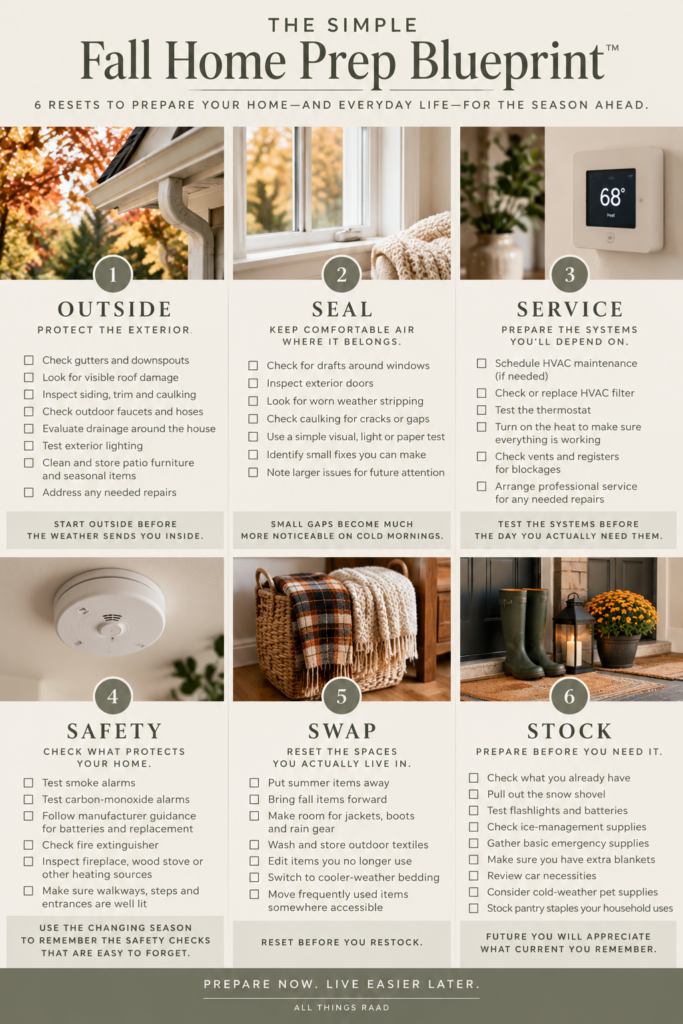
The Simple Fall Home Prep Blueprint™
6 resets to prepare your home—and everyday life—for the season ahead.
OUTSIDE — Protect the exterior.
Walk the property. Check drainage, gutters, exterior surfaces, hoses, lighting, and seasonal outdoor items.
SEAL — Prepare for colder air.
Check doors, windows, weather stripping, and obvious drafts.
SERVICE — Prepare the systems you’ll rely on.
Check heating, filters, thermostats, and vents. Schedule professional maintenance where appropriate.
SAFETY — Test what protects your home.
Check alarms, fire-safety equipment, seasonal heating sources, and exterior lighting.
SWAP — Reset the spaces you actually live in.
Put summer away, bring fall forward, and edit before storing.
STOCK — Prepare before you need it.
Check what you already own, then fill genuine gaps in your cold-weather, household, car, pet, and emergency necessities.
PREPARE NOW. LIVE EASIER LATER.
ALL THINGS RAAD


☕ From Gretchen :
I’ve spent a lot of years thinking about homes—how they’re designed, how they’re built, how rooms function, and how people actually live in them.
And the more I think about it, the more I realize caring for a home has very little to do with keeping everything perfect.
It’s paying attention.
It’s noticing the small thing before it becomes the frustrating thing. It’s recognizing when a space isn’t working the way your family needs it to anymore. It’s making adjustments as the seasons—and life—change.
Some of the things we do for our homes will never be the pretty part.
But very often, they’re the things that allow us to enjoy the pretty part.
Gretchen ❤️
The All Things Raad Principle™
A Home That Supports You Needs Attention Before It Needs Reaction
There will always be something around a home that could be cleaned, repaired, organized, replaced, or improved.
The goal isn’t staying ahead of every possible task.
It’s paying attention to what matters next.
Notice what your home needs. Create simple systems for the things that repeat. Handle what you can before it becomes urgent, and prioritize the rest.
A well-prepared home isn’t one where everything is done. It’s one where the important things have been noticed, planned for, and made easier before they’re needed.
That’s intentional living at home.
Continue Your Journey
Turn This Into Your Own Seasonal Home Reset
This checklist isn’t meant to become another list you save and never look at again.
Use it as the beginning of your own seasonal home reset.
Start with the six categories:
OUTSIDE → SEAL → SERVICE → SAFETY → SWAP → STOCK
Then customize them.
Maybe you have a fireplace that needs attention every fall. Maybe you have a pool to close, extensive outdoor furniture to store, or a garden that needs to be put to bed.
Maybe you live in a townhouse or condo and half of those things don’t apply to you.
That’s exactly the point.
A useful home system should reflect the home you’re actually caring for—not somebody else’s checklist.
Once you’ve created yours, save it somewhere you’ll find it next fall. You could even add notes as you go: what worked, what you forgot, what you didn’t actually need, and what should happen earlier next year.
Make This Your Fall Home Reset
Start with the six categories in the Blueprint™, then add the tasks specific to your home.
Save your finished list somewhere you’ll actually find it next fall. Each year, make a few notes about what you forgot, what you didn’t need, and what should happen earlier next time.
You don’t need to reinvent your fall routine every year. You just need to create it once—and let it get better as you use it.
And if six categories still feel like too much?
Do one each weekend.
The goal isn’t to race through fall preparation.
It’s to enter the next season with a home that’s a little more ready to support you.
Research & References
The practical home-maintenance and cold-weather recommendations in this article are informed by guidance from established government, nonprofit, and energy-efficiency resources.
ENERGY STAR — Heating & Cooling Maintenance Checklist
Guidance on annual pre-season HVAC maintenance, heating-system checkups, thermostat settings, and routine filter care.
ENERGY STAR Heating & Cooling Maintenance Checklist
ENERGY STAR — DIY Checks & Inspections
Practical guidance for identifying common household air leaks, including areas around doors and windows.
ENERGY STAR DIY Checks & Inspections
U.S. Fire Administration — Smoke Alarms
Home-safety guidance covering smoke-alarm testing, batteries, placement, and replacement.
U.S. Fire Administration Smoke Alarm Guidance
American Red Cross — Pennsylvania Winter Storm Preparedness
Cold-weather preparedness guidance addressing the home as well as winter supplies and household needs.
American Red Cross Pennsylvania Winter Preparedness
Continue Exploring
Want to dig a little deeper into something you noticed during your fall walk-through? These resources are a good place to start.
Find Where Your Home Is Losing Air
ENERGY STAR’s homeowner guide offers simple ways to identify air leaks around doors, windows, and other areas before deciding what actually needs attention.
Key takeaway: Find the problem first rather than assuming a larger repair is necessary.
Explore ENERGY STAR’s DIY Air-Leak Checks
Understand Seasonal HVAC Maintenance
ENERGY STAR explains what routine pre-season HVAC maintenance can include and why fall is an appropriate time to think about the heating system.
Key takeaway: Check the system before it becomes something you depend on every day.
Read the ENERGY STAR Maintenance Checklist
Review Your Smoke-Alarm Routine
The U.S. Fire Administration provides straightforward guidance about testing, batteries, placement, and replacement.
Key takeaway: A seasonal reset can be your reminder to check—but alarm testing shouldn’t be only a seasonal task.
Review U.S. Fire Administration Smoke Alarm Guidance
Prepare for Pennsylvania Winter Weather
The American Red Cross offers practical guidance for preparing the house, household, and pets for colder weather.
Key takeaway: Winter preparation isn’t only about maintaining the house. It’s also about thinking ahead to what the people living inside it will need.
Read Pennsylvania Winter Preparedness Guidance
Continue Reading on All Things Raad
Seasonal Home Care Blueprint
Take the seasonal-reset idea beyond fall with a broader approach to caring for your home throughout the year.
Next step: Care for the house.
Hidden Places That Make Your Home Feel Cluttered
If your seasonal swap uncovered a few forgotten spaces, start with the places that quietly contribute to visual and mental clutter.
Next step: Reset the spaces.
Daily Habits to Stay Organized
Once you’ve reset your spaces, simple repeatable habits can help keep you from continually starting over.
Next step: Maintain the system.
Frequently Asked Questions
When should I start fall home maintenance?
Early fall is a practical time to begin, ideally while temperatures are still comfortable and before regular freezing weather arrives.
Starting earlier gives you time to identify repairs, schedule professional service when needed, and handle exterior tasks without feeling rushed.
The exact timing depends on your climate and your home, so use local conditions rather than a specific calendar date as your ultimate guide.
What should be on a fall home maintenance checklist?
A useful fall checklist should address both the physical house and how you’ll use it during colder weather.
The All Things Raad approach uses six categories: Outside, Seal, Service, Safety, Swap, and Stock.
Together, they cover exterior preparation, drafts, household systems, safety equipment, seasonal organization, and cold-weather
necessities without creating one enormous list of unrelated tasks.
How can I prepare my home for fall without getting overwhelmed?
Start by observing instead of doing.
Take a 15-minute walk around your home and write down what needs attention. Then separate those items into Do Now, Do Soon, and Before Winter.
You don’t have to complete your fall checklist in one weekend. Spreading the work over several weeks can make seasonal preparation much more manageable.
What home maintenance should I complete before winter?
Priorities vary by property and climate, but common areas to consider include gutters and drainage, exterior faucets and hoses, doors and windows, heating equipment, smoke and carbon-monoxide alarms, seasonal heating sources, outdoor belongings, and basic cold-weather supplies.
If something requires technical expertise or creates a safety risk, use a qualified professional rather than treating it as a DIY checklist item.
Should I have my HVAC system serviced in the fall?
ENERGY STAR recommends annual pre-season HVAC checkups and identifies fall as the appropriate season for heating-system checks.
Your particular equipment manufacturer and service provider can help determine the appropriate maintenance schedule for your home.
Fall is also a useful time for homeowners to check filters according to their system’s recommendations and make sure vents and registers aren’t unintentionally blocked.
How often should I create a seasonal home maintenance checklist?
You shouldn’t need to recreate it every year.
Build a checklist for your own home, save it, and update it as your house and household change.
Over time, your seasonal resets can become simple recurring systems rather than new projects you have to remember from scratch.
Join The All Things Raad Letter
A calmer home isn’t created in one weekend.
It’s built through small systems, thoughtful decisions, and the little resets that make everyday life work better.
The All Things Raad Letter brings those ideas directly to your inbox twice each month—thoughtful inspiration, practical systems, beautiful everyday finds, and new ways to create spaces that support the life you want to live.



Your space shapes your life.
Clarity, balance, and intentional living.
inspired by places near and far.
Design through discovery.
What I bring home from Everywhere.
Simple ways to make life easier.
Smart Systems. Better Living.
Less Cluster, more function
Gather, cook, and live well.
everyday moments, done beautifully.
A home that supports how you feel.
Design that feels as good as it looks
Timeless style, real-life function.
Spaces designed for how you live.
What you’ll find around here


Shop the Raad Edit
GRETCHEN'S PICKS
Thoughtfully selected pieces I actually use, recommend, and trust — designed to simplify your home and elevate your everyday living.
The Raad Edit


The 30-Day Home Reset Starter Guide: A Downloadable Guide to Declutter your Space & Simplify your Life.