


Declutter Your Mind First: Why Your Home Feels Overwhelming
A simple guide to clearing mental clutter so your home – and life- feel calmer.
Have you ever walked into a room that wasn’t especially messy….
…. but somehow it sill felt overwhelming?
Sometimes what we’re experiencing isn’t physical clutter.
It’s mental clutter.
The endless to-do lists.
The unfinished projects.
The constant notificiations.
The hundreds of tiny decisions we make every day.
Our homes often reflect what’s happening inside our minds.

🤍 Why This Works
Mental Clutter isn’t just a feeling.
Research suggests that when our brains are overloaded with competing information, our working memory becomes less efficient, making it harder to focus, make decisions, and feel mentally rested. Physical clutter can contribute to that cognitive overload, which is one reason many people feel calmer after simplifying their environment. Northwell Health
If your home feels overwhelming, the problem isn’t just the clutter you can see—it’s the mental clutter you carry. Before you organize your home, you need to create clarity in your mind. When you declutter your thoughts, your home naturally begins to follow.
🧠 Why Your Home Feels Overwhelming (Even When It’s Not That Mess
Have you ever walked into a room and instantly felt… overwhelmed?
Not because it’s completely out of control—but because it just feels like too much.
Too many things
Too many decisions
Too many unfinished tasks
And suddenly, even the smallest mess feels heavy.
Here’s what most people don’t realize:
👉 The overwhelm isn’t just in your home
👉 It’s in your mind
🌿 The Hidden Clutter You Can’t See
Before physical clutter builds, mental clutter shows up first.
It looks like:
- Constantly thinking about what needs to be done
- Feeling behind, even when you’re trying
- Starting tasks but not finishing them
- Walking into a room and not knowing where to begin
This is what creates that feeling of:
“I don’t even know where to start.”
And when that happens…
you don’t start at all.
🔄 The Cycle That Keeps You Stuck
Here’s the pattern most people are in:
- You feel overwhelmed
- You avoid starting
- The mess builds
- The overwhelm increases
And the cycle repeats.
The solution isn’t more motivation.
It’s creating clarity.
🔑 Why You Need to Declutter Your Mind First
Before you organize your home, you need to:
- Slow the mental noise
- Simplify your focus
- Create a clear starting point
Because when your mind feels calm:
- Decisions become easier
- Tasks feel manageable
- Your home no longer feels like a burden

✨ Gretchen’s Tip
Whenever I feel mentally overwhelmed, I don’t immediately start cleaning.
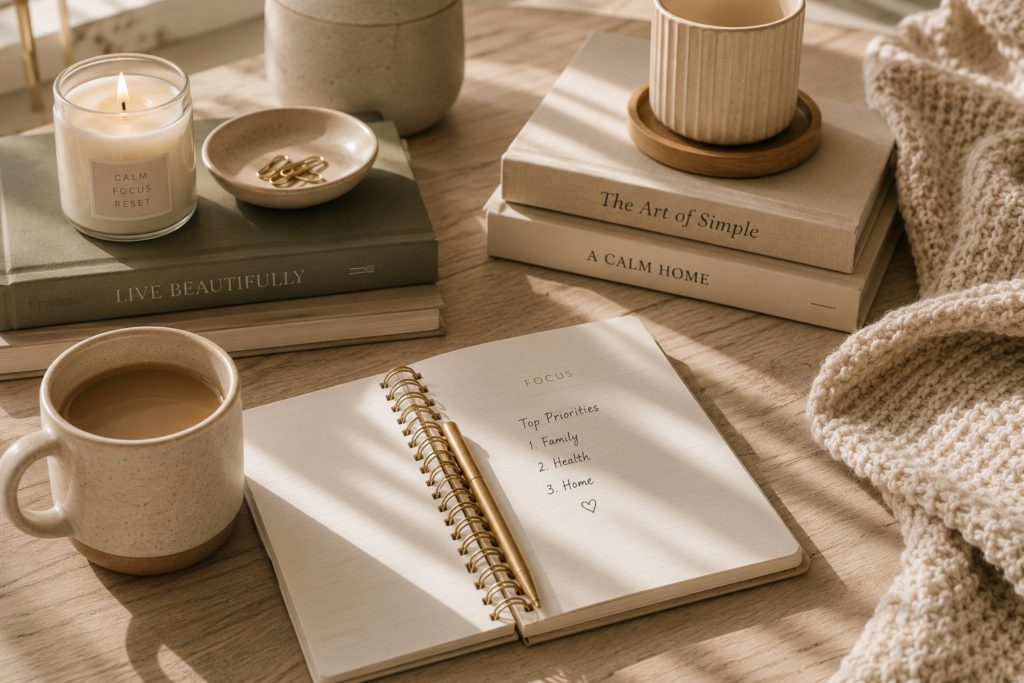
Instead, I grab a notebook and write down everything that’s taking up space in my head.
Appointments.
Ideas.
Things I don’t want to forget.
Just getting those thoughts onto paper usually makes it easier to think clearly again.
Then I decide what actually needs my attention today.
🧭 How to Declutter Your Mind (Simple, Real-Life Steps)
You don’t need a full routine or a perfect system.
Start small.
1. Get Everything Out of Your Head
Take 5 minutes and write down:
- Everything you need to do
- Everything you’ve been thinking about
- Everything that feels unfinished
👉 This clears the mental load instantly
2. Choose Just One Starting Point
Instead of trying to do everything…
Pick one thing:
- One room
- One task
- One small reset
👉 Clarity creates momentum.
3. Let Go of “All or Nothing”
This is where most people get stuck.
You don’t need:
- A full day
- A perfect plan
- The energy to do everything
You just need to begin
4. Create Space Before You Fill It
Don’t rush to organize.
First:
- Pause
- Clear
- Simplify
👉 Your home doesn’t need more systems—it needs less noise.
5. Build a Reset Habit (Not a Perfect Routine)
Forget perfection.
Focus on:
- Small daily resets
- Consistency over intensity
- Progress over perfection
👉 This is how calm becomes your baseline
🌿 What Happens When Your Mind Feels Clear
Everything shifts.
- Your home feels lighter
- You make quicker decisions
- You stop overthinking
- You start taking action
And suddenly…
What once felt overwhelming becomes manageable.

Did You Know?
Researchers describe clutter as a form of visual distraction that competes for your brain’s attention. When your environment constantly demands your focus, it becomes more difficult to concentrate, remember information, and make decisions clearly. Northwell Health
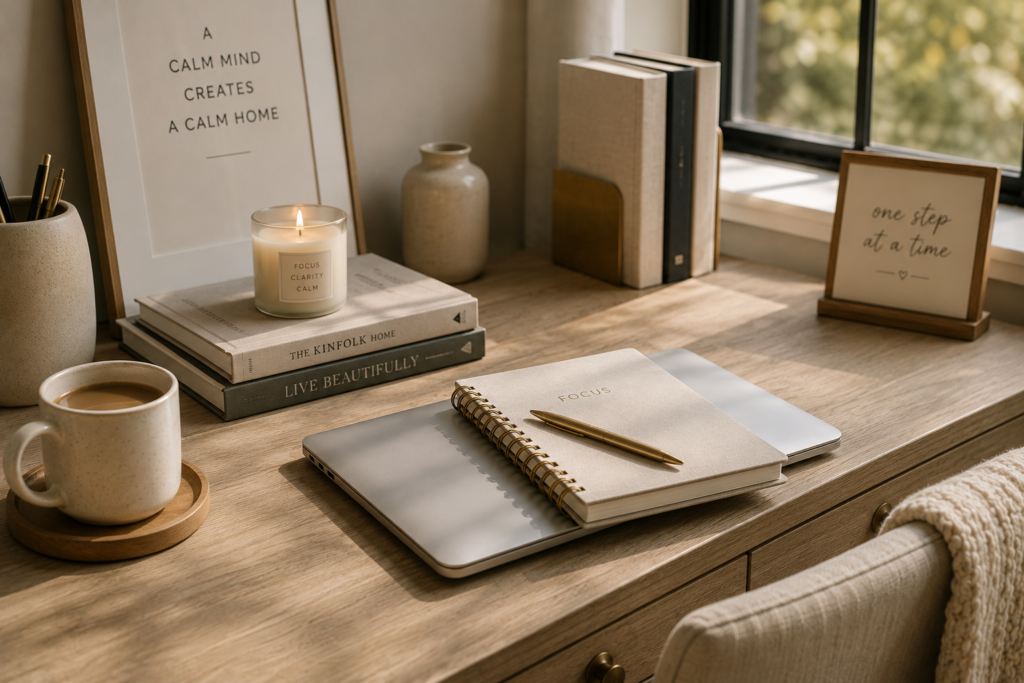
🏡 Your Home Reflects Your Mind
Your home isn’t separate from you—it’s an extension of how you feel.
When your mind is:
- Cluttered → your home feels chaotic
- Calm → your home feels peaceful
So instead of asking:
“How do I fix my home?”
Start asking:
“How do I create more clarity in my mind?”

✔️ Try this Today
Take five minutes.
Write down everything currently occupying your mind.
Don’t organize it.
Don’t solve it.
Simply get it out of your head and onto paper.
Sometimes clarity begins with creating a little space.
The Mind Reset Method Infographic:
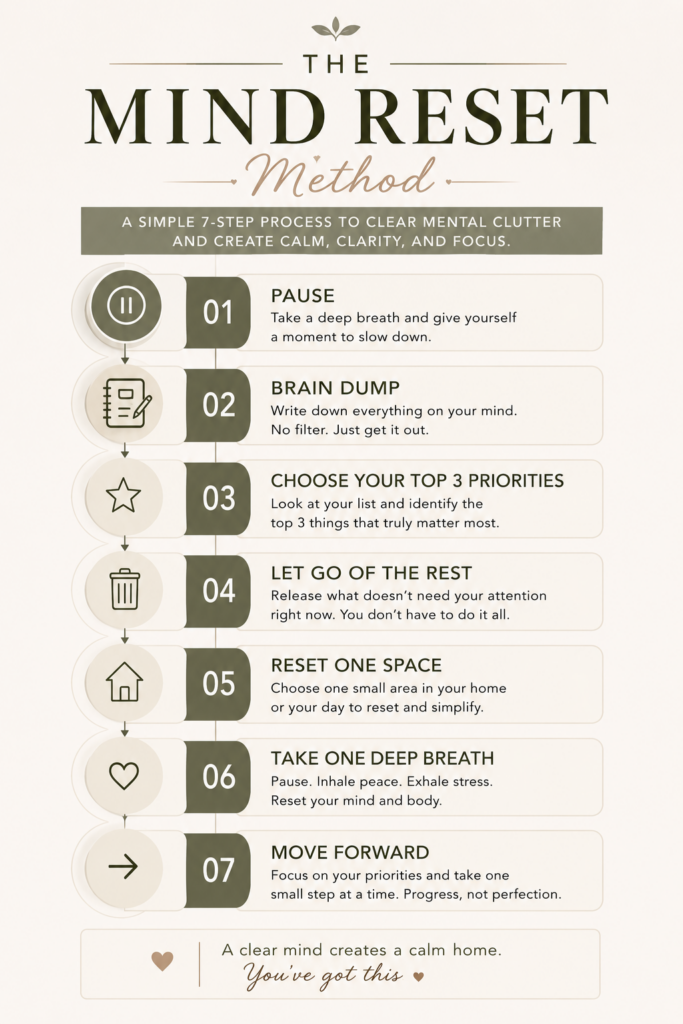
📥 Want Help Decluttering Your Mind?
If this resonated with you, I’m creating something to guide you through this process.
✨ The Declutter Your Mind Workbook will help you:
- Clear mental clutter
- Reduce overwhelm
- Create focus and clarity in your daily life
👉 Coming soon

🏁 Where to Start Today
Start here:
- Write everything down
- Choose one small task
- Take one simple step
That’s it.
Because clarity doesn’t come from doing more…
It comes from doing less—with intention.

☕ From Gretchen :
I’ve learned that some of the messiest seasons of my life weren’t the ones where my house was overflowing with clutter.
They were the seasons where my mind never stopped racing.
When everything feels important, nothing feels peaceful.
I’ve discovered that slowing down—even for a few minutes—helps me show up differently for my home, my family, and myself.
A calm home doesn’t begin with organizing another drawer.
It often begins by giving your mind permission to rest.
Gretchen ❤️

Ready to Create More Calm in Your Everyday Life?
When our minds feel cluttered, even the smallest tasks can seem overwhelming. One of the simplest ways I’ve found to reduce that mental load is by creating gentle routines and practical systems that remove the constant need to make decisions throughout the day.
That’s exactly why I created The Complete Home Reset System—a step-by-step guide that helps you simplify your home, establish realistic routines, and create a calmer environment that supports your well-being.
→ Explore the Complete Home Reset System
Looking for a simple place to begin?
Download my Free Home Reset Starter Guide and take the first small step toward creating a calmer home—and a calmer mind.
→ Download the Free Starter Guide

I only recommend products I personally use, genuinely love, or would happily recommend to family and friends. Some links may be affiliate links, which means I may earn a small commission at no additional cost to you.
Thank you for supporting All Things Raad.
🤍
🤍 Gretchen’s Favorite Calming Essentials
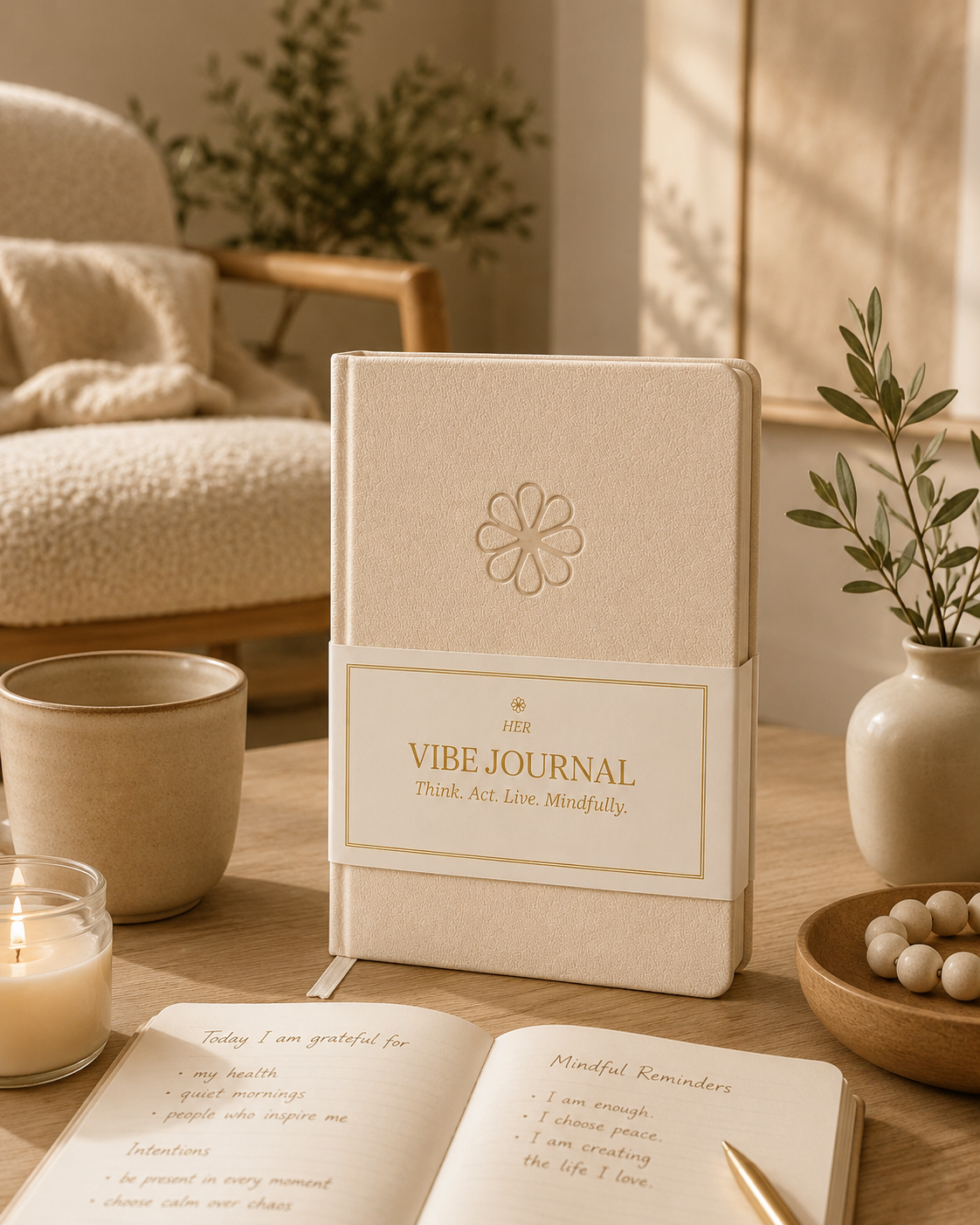
Guided Journal
Writing things down has become one of my favorite ways to clear mental clutter before it builds into overhelm.
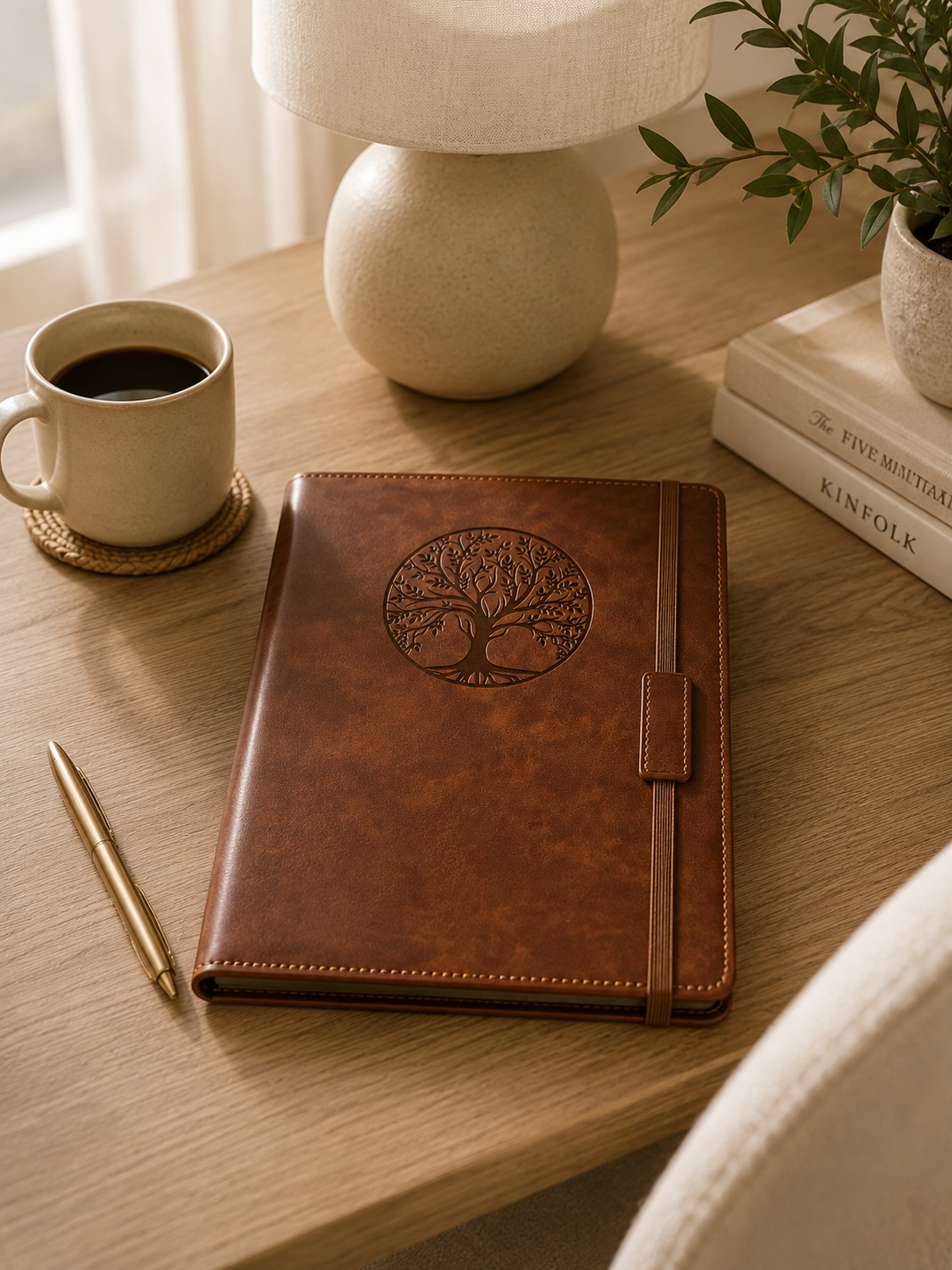
Leather Journal
Having one dedicated place for ideas, notes, and to-do lists helps me stop carrying everything around in my head.
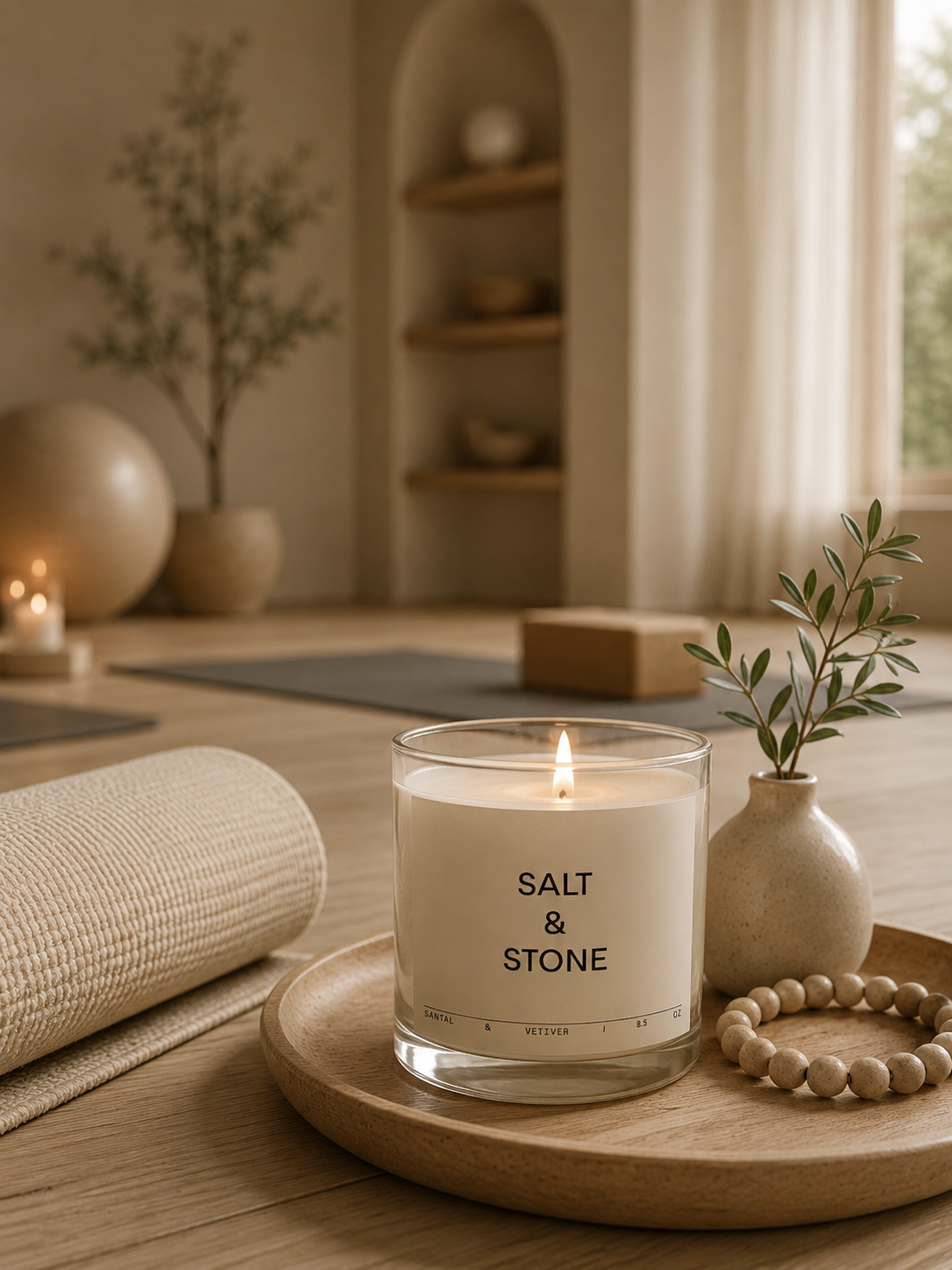
Favorite Candle
Lighting a candle has become a simple signal that it’s time to slow down, reset, and be present.
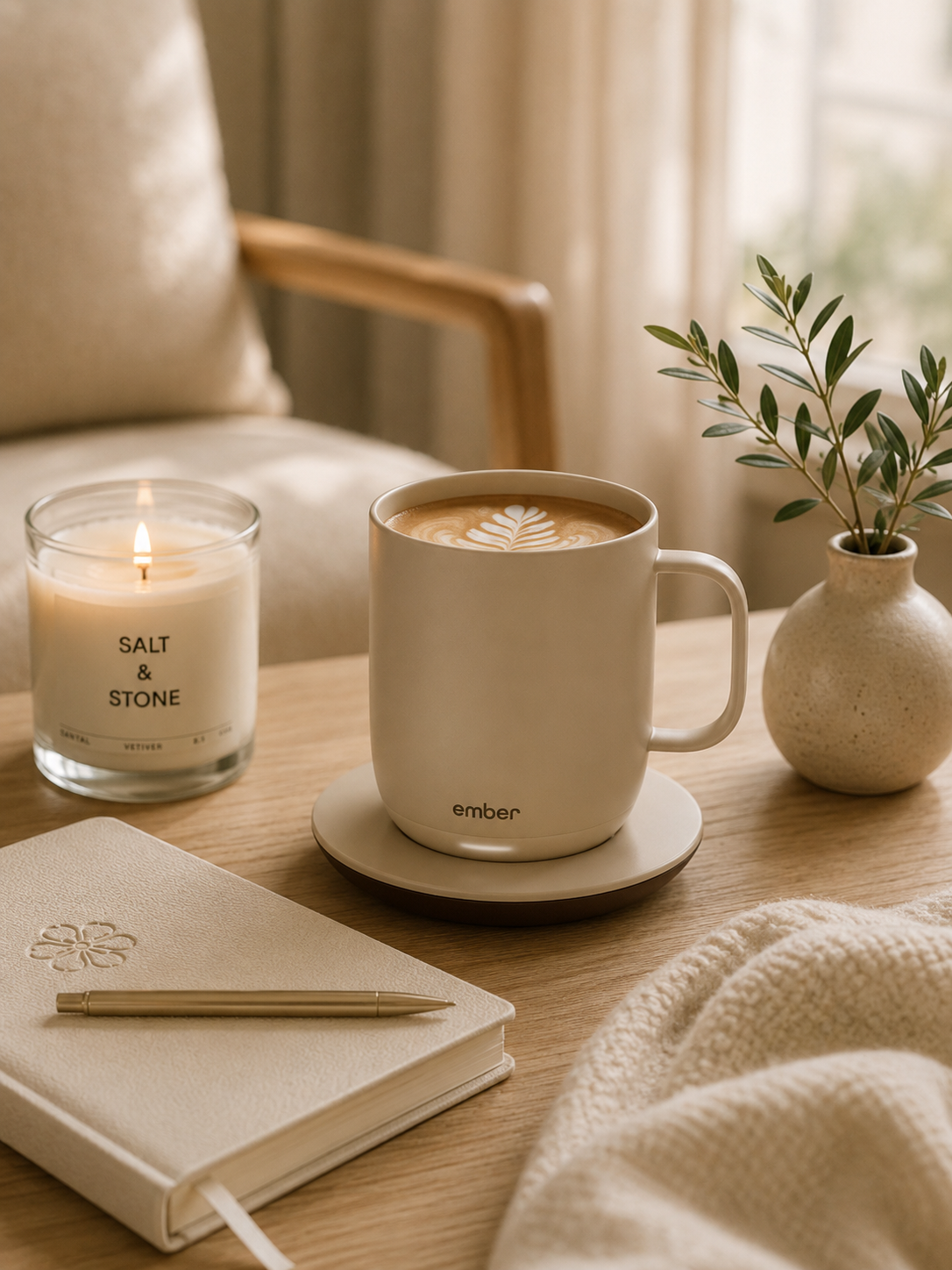
Smart Coffee Mug
Some of my best ideas – and my calmest moments – have happened with a warm cup of coffee in my favorite mug.
Explore My Complete Wellness Collection→
I only recommend products I personally use, genuinely love, or would happily recommend to family and friends. Some links may be affiliate links, which means I may earn a small commission at no additional cost to you.
Thank you for supporting All Things Raad.
🤍
📚 Explore More Inspiration
✓ American Psychological Association – Stress Effects on the Body
Learn how chronic stress affects both mental and physical health, and why creating restorative routines is an important part of overall well-being.
✓ Mayo Clinic – Stress Symptoms: Effects on Your Body and Behavior
An overview of ho ongoing stress influences daily life and practical ways to recognize when it’s time to slow down and reset.
✓ Mindful – Simple Practices to Reduce Stress and Increase Presence
Mindfulness articles and practical exercises that encourage slowing down, building awareness, and creating intentional daily habits.
✓ Harvard Health Publishing – Mindfulness Benefits
Research- backed insights into how mindfulness practices can improve emotional well-being, reduce stress, and support clearer thinking.
🔗 Continue Reading on All Things Raad
- How to Reset Your Home When You Feel Overwhelmed
- 15-Minute Decluttering Wins That Actually Work
- How to Keep Your Home Clean Without Spending Hours
❓ Frequently Asked Questions
How do I stop feeling overwhelmed at home?
Start by decluttering your mind first—write everything down, choose one small task, and focus on progress over perfection.
How do I declutter my mind when I feel overwhelmed?
Start by writing down everything competing for your attention. Then choose your top priorities, simplify your surroundings, and focus on one small step at a time.
What is mental clutter?
Mental clutter is the buildup of thoughts, tasks, and decisions that overwhelm your ability to take action.
Can a messy home affect mental health?
Research suggests that physical clutter can increase cognitive load, making it harder to focus, make decisions, and relax. Creating a calmer environment may support mental clarity and reduce feelings of overwhelm. Northwell Health
Why can’t I start decluttering my home?
Most people feel stuck because they lack clarity. When you don’t know where to begin, it’s easier to avoid starting.
How do I simplify my life and home?
Focus on doing less, creating simple systems, and building small daily habits instead of trying to do everything at once.

Your space shapes your life.
Clarity, balance, and intentional living.
inspired by places near and far.
Design through discovery.
What I bring home from Everywhere.
Simple ways to make life easier.
Smart Systems. Better Living.
Less Cluster, more function
Gather, cook, and live well.
everyday moments, done beautifully.
A home that supports how you feel.
Design that feels as good as it looks
Timeless style, real-life function.
Spaces designed for how you live.
What you’ll find around here


Shop the Raad Edit
GRETCHEN'S PICKS
Thoughtfully selected pieces I actually use, recommend, and trust — designed to simplify your home and elevate your everyday living.
The Raad Edit


The 30-Day Home Reset Starter Guide: A Downloadable Guide to Declutter your Space & Simplify your Life.