


How to Organize Your Kitchen Once—and Keep It That Way
Create simple systems that make everyday cooking, gathering, and living feel calmer, easier, and beautifully organized.
Walk into almost any home, and you’ll quickly discover that the kitchen isn’t just where meals are prepared—it’s where life happens.
It’s where hurried weekday breakfasts begin before everyone heads out the door. It’s where groceries land after a busy afternoon, lunches are packed, homework is spread across the island, and conversations continue long after dinner has ended. The kitchen quietly carries the rhythm of everyday life, which is exactly why it often becomes one of the hardest spaces in the home to keep organized.
If you’re anything like me, you’ve probably organized your kitchen before.
Maybe you emptied every cabinet, purchased matching containers, labeled pantry bins, and spent an entire Saturday creating the kitchen you’d always wanted. For a little while, everything felt wonderful. Every utensil had a place. The countertops were clear. Opening a cabinet actually made you smile.
And then life happened.
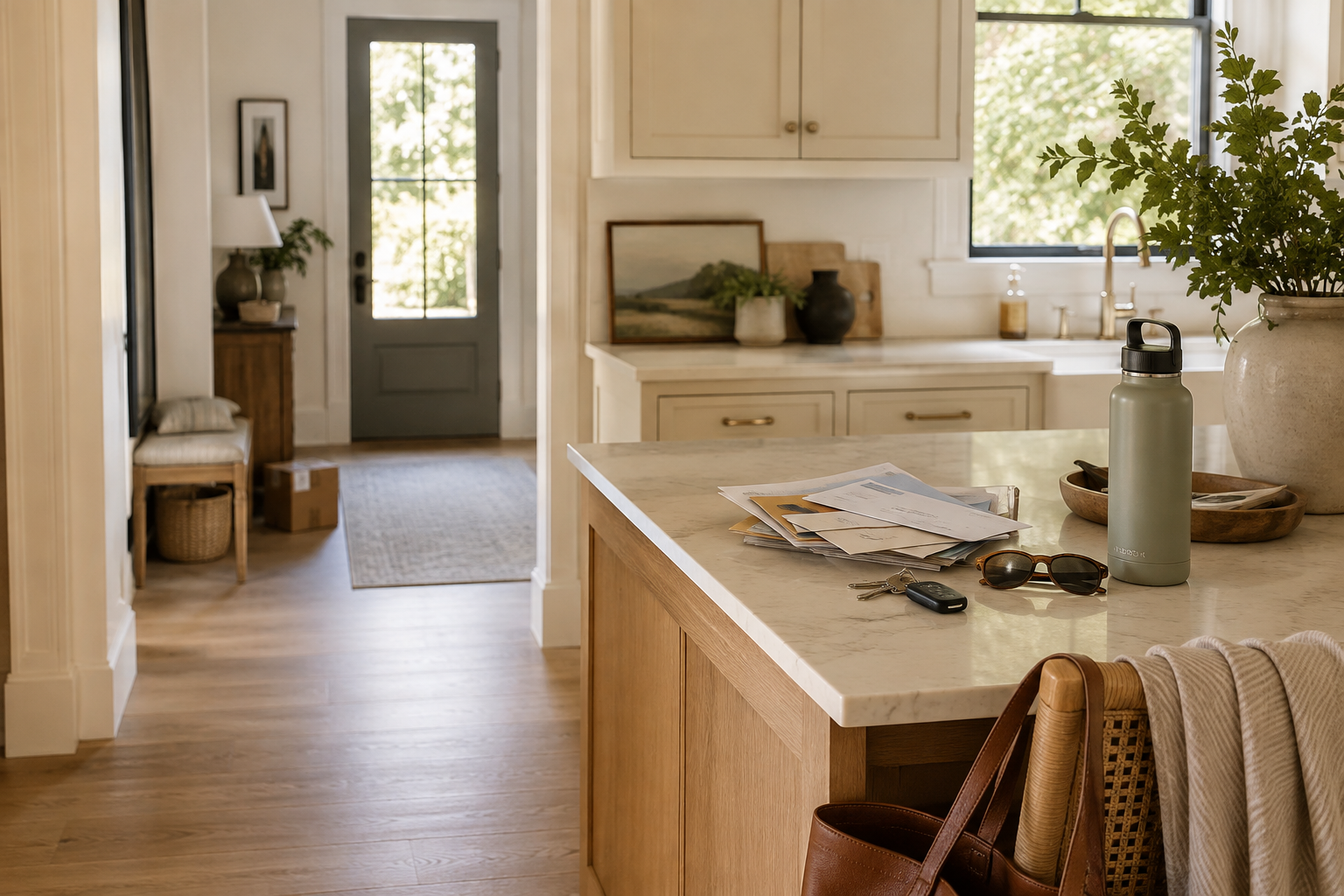
A few busy weeks passed. The mail landed on the counter. Grocery bags were tucked into the nearest cabinet. Water bottles multiplied. A drawer slowly became the place where “I’ll deal with it later” items collected. Before long, it felt as though all that hard work had quietly disappeared.
If you’ve ever found yourself wondering why your organized kitchen never seems to stay that way, you’re certainly not alone.
The truth is, most of us don’t struggle because we aren’t organized enough. We struggle because we’ve been taught to organize our kitchens instead of creating systems that naturally support the way we live every day.
That’s an important difference.
Organization isn’t about perfectly folded dish towels or beautifully labeled containers that look good in a photograph. It’s about making your mornings smoother, preparing dinner with less stress, finding what you need without frustration, and creating a space that welcomes your family instead of overwhelming you.
The good news is that lasting organization doesn’t require perfection.
It requires thoughtful, realistic systems that work with your daily routines—not against them.
In this guide, I’ll walk you through The All Things Raad Kitchen System™, a simple six-step approach designed to help you organize your kitchen once—and, more importantly, keep it that way. Whether you’re starting with one drawer or refreshing your entire space, these practical strategies will help you create a kitchen that feels calmer, functions better, and supports the life you want to live.
Because when your kitchen works well, everything that happens inside it becomes just a little bit easier.
Why This Matters
An organized kitchen is often viewed as a cosmetic goal—something that’s nice to have when guests come over or when inspiration strikes for a weekend decluttering project. But in reality, the way your kitchen functions has a direct impact on how your home feels every single day.
Think about how many times you walk into your kitchen in a week.
Every meal you prepare, every cup of coffee you pour, every lunchbox you pack, every grocery item you put away, and every family conversation that unfolds around the island depends on a space that supports your routines instead of slowing them down.
When everyday items are difficult to find, countertops become crowded with things that don’t have a home, or cabinets are packed beyond what they can comfortably hold, even simple tasks begin to feel more frustrating than they need to be. On the other hand, thoughtfully organized spaces reduce unnecessary friction by making daily routines feel more intuitive and efficient. Professional organizers consistently emphasize that sustainable organization comes from simplifying what you own, creating purposeful zones, and making it easy to return items to their designated place rather than relying on willpower alone.
That’s why I believe kitchen organization should never begin with buying another basket or another set of matching containers.
It should begin by asking one simple question:
“How can my kitchen better support the way I actually live?”
When you organize around your everyday habits instead of an idealized version of your home, maintaining that organization becomes dramatically easier.
That’s the philosophy behind The All Things Raad Kitchen System™.
Rather than focusing on creating a picture-perfect kitchen, we’ll focus on creating practical systems that reduce stress, simplify everyday routines, and make it easier to care for your home over time.
Because the goal isn’t to have the most organized kitchen on the block.
The goal is to create a kitchen that quietly supports the moments that matter most.

🤍 Why This Works
Creating an organized kitchen isn’t just about making your home look beautiful—it’s about designing a space that works with your daily habits instead of against them.
Research published in the Journal of Environmental Psychology found that people’s perception of clutter is closely connected to their overall sense of well-being. The study concluded that subjective clutter—how cluttered a space feels to us—and consistent decluttering habits were significant predictors of well-being, suggesting that thoughtfully organized spaces can contribute to a calmer and more positive home environment. (Rogers, C. & Hart, R. 2021)
Professional organizers consistently echo this idea. Rather than relying on willpower to stay organized, they recommend creating simple systems that make it easy to return items to the same place every time. When storage matches your everyday routines, maintaining an organized kitchen becomes less about motivation and more about habit. (Consumer Reports)
The takeaway? Lasting organization doesn’t come from buying more containers. It comes from creating systems that make the right choice the easiest choice—day after day.
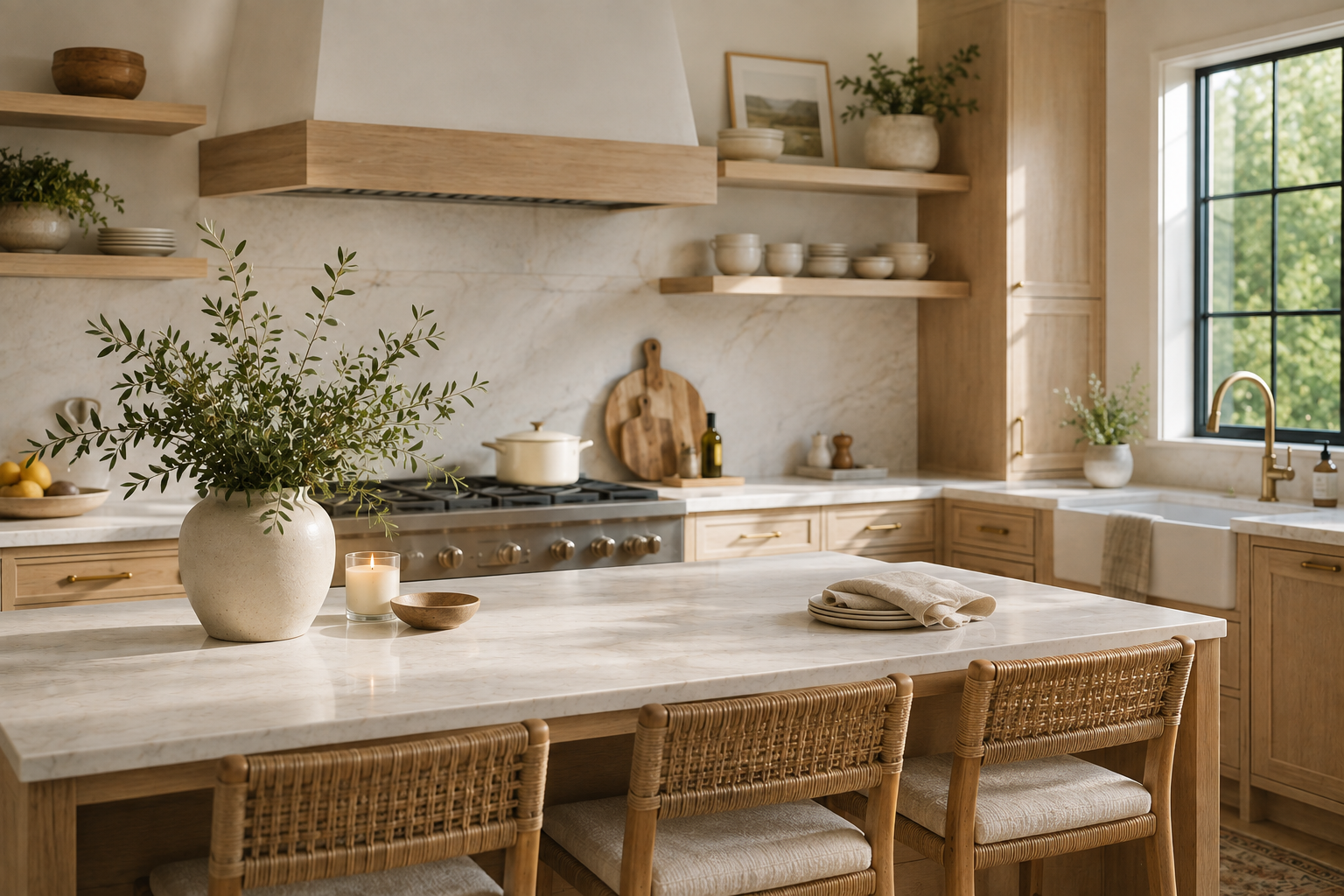
Introducing The All Things Raad Kitchen System™
If you’ve ever organized your kitchen only to find yourself starting over a few months later, you’re not alone. The problem usually isn’t a lack of effort—it isn’t even a lack of organization.
More often than not, it’s because we’ve been taught to organize things instead of creating systems that naturally support the way we live.
That’s an important distinction.
Organization is a one-time event.
Systems are what make organization last.
Think about the routines that happen in your kitchen every single day. You reach for your favorite coffee mug each morning. You unload the dishwasher after dinner. You pack lunches before work or school. You put groceries away, prepare meals, grab snacks, and wipe down the counters before heading to bed.
When your kitchen is organized around those everyday habits, maintaining it becomes surprisingly simple. Instead of constantly asking yourself, “Where should this go?” you’ll already know because every item has a logical home based on how you actually use it.
That’s the foundation of The All Things Raad Kitchen System™.
It’s not about creating a picture-perfect pantry or buying dozens of matching containers (even though that would be truly amazing!) It’s about building practical systems that reduce daily friction, simplify your routines, and help your kitchen stay organized long after the weekend organizing project is over.
The six systems you’ll learn aren’t complicated. In fact, they’re intentionally simple. Small, consistent changes are almost always easier to maintain than dramatic overhauls—and they’re far more likely to become lasting habits.
So rather than trying to organize everything at once, let’s start by building a kitchen that works with you instead of expecting you to work harder to keep it organized.
The All Things Raad Kitchen System™
System 1: Clear Before You Organize
“You can’t organize what you don’t need.”
It’s tempting to jump straight into buying organizers, matching containers, or new storage solutions. After all, those are often the most exciting part of any organization project.
But here’s the truth I’ve learned over the years:
No organizer can solve the problem of keeping too much.
Before you decide where something belongs, you first need to decide whether it belongs in your kitchen at all.
Every cabinet, drawer, and shelf has a limited amount of space. When that space is filled with duplicate utensils, forgotten gadgets, chipped mugs, expired pantry items, or appliances that haven’t been used in years, even the best organizational system will eventually become difficult to maintain.
That’s why the first step isn’t organizing.
It’s editing.
Think of yourself less as someone cleaning out a kitchen and more as someone thoughtfully curating a space that supports the way you live today.
Ask yourself simple questions as you go:
- Do I use this regularly?
- Would I buy this again today?
- Is there another item that serves the same purpose?
- Is this helping my kitchen function better—or simply taking up valuable space?
Giving yourself permission to let go of things that no longer fit your life creates room for the items you truly use and value. That extra breathing room is what makes every system you’ll build from this point forward easier to maintain.
Remember, the goal isn’t to own less for the sake of owning less.
The goal is to make space for what matters most.
Where to Begin
If organizing your entire kitchen feels overwhelming, don’t try to tackle everything at once.
Instead, choose one small area, such as:
- One junk drawer
- A utensil drawer
- Your coffee cabinet
- The spice shelf
- Under the kitchen sink
- One pantry shelf
Completing a single space builds confidence and momentum, making it much easier to continue.
Progress has a way of creating more progress.
Common Items to Let Go Of
As you work through your kitchen, you’ll likely come across items that no longer serve a purpose.
Consider donating, recycling, or responsibly disposing of:
- Duplicate utensils and gadgets
- Chipped or cracked dishes
- Mismatched food storage containers without lids
- Expired spices and pantry staples
- Promotional water bottles and travel mugs you never use
- Small appliances that haven’t been used in the past year
- Takeout condiment packets you’ve accumulated
- Old plastic cups and containers that are stained or damaged
Every item you remove creates more space for the things you actually reach for every day.
The Last Word
Organization begins by making room for what matters. When you clear away what no longer serves your everyday life, every system you build afterward becomes simpler to maintain.
System 2: Create Purposeful Zones
“Store items where you use them—not where you think they should go.”
One of the biggest mistakes people make when organizing a kitchen is trying to fit their daily routines into the way the kitchen was designed.
Instead, flip that thinking around.
Design your kitchen around the way you naturally live.
Every kitchen has its own rhythm. You make coffee in the same place every morning. You prepare meals on the same stretch of countertop. You unload the dishwasher into the same cabinets. Without even realizing it, you’ve already created habits. Your organization system should simply support those habits instead of fighting them.
When similar items are grouped together based on how they’re used—not just what they are—your kitchen becomes easier to navigate. Cooking feels more efficient, cleanup takes less time, and everyone in the household knows where things belong.
That’s the power of creating purposeful zones.
Think in Activities, Not Cabinets
Instead of organizing one cabinet at a time, organize by the activities that happen in your kitchen.
For example:
☕ Coffee & Tea Station
Keep mugs, coffee, tea, sweeteners, filters, and your favorite accessories together in one dedicated area. Your entire morning routine becomes quicker and more enjoyable when everything you need is within reach.
🍳 Cooking Zone
Store pots, pans, cooking utensils, oils, spices, and frequently used ingredients close to the stove. Keeping these essentials together minimizes unnecessary movement while preparing meals.
🥣 Meal Prep Zone
Choose one section of countertop or one cabinet to hold mixing bowls, measuring cups, cutting boards, knives, and prep tools. Having everything in one place makes meal preparation feel more organized and less chaotic.
🥫 Pantry Zone
Group foods by category rather than simply placing them wherever space is available.
Consider organizing by:
- Breakfast foods
- Baking ingredients
- Pasta and grains
- Snacks
- Canned goods
- Dinner staples
- Drinks
The goal isn’t perfect rows of matching containers. It’s making it easy to see what you have before you buy more.
🍽 Everyday Dining Zone
Keep everyday dishes, glasses, silverware, and napkins close together, preferably near the dishwasher. This simple adjustment makes unloading dishes faster and makes setting the table almost effortless.
🧽 Cleaning Zone
Store dish soap, dishwasher pods, cleaning cloths, trash bags, and other cleaning supplies together—ideally under or near the sink. When everything has a designated home, tidying up after meals becomes part of the routine rather than another chore.
Keep the Most-Used Items Within Easy Reach
One of the simplest ways to make your kitchen work better is to think about frequency of use.
Ask yourself:
- What do I reach for every single day?
- What do I use every week?
- What only comes out a few times a year?
Everyday essentials should be stored between waist and shoulder height whenever possible, where they’re easiest to access. Seasonal serving pieces, specialty appliances, and holiday items can be stored on higher shelves or in less accessible spaces.
When your storage reflects how often you actually use something, your kitchen naturally becomes more efficient.
The Last Word
Purposeful zones make organization feel effortless because they match the way you naturally move through your kitchen. When every item lives where you use it most, maintaining order becomes part of your routine—not another task on your to-do list.
System 3: Simplify Your Storage
“The best storage solution is often owning less—not buying more.”
Walk down the home organization aisle of almost any store, and it’s easy to believe that the secret to an organized kitchen is another basket, another bin, or another set of matching containers.
While thoughtfully chosen storage products can certainly help, they aren’t what creates an organized kitchen.
Simple systems do.
Storage should support the way you live—not become another project to manage.
Before purchasing anything new, take a closer look at what you already have. Are your shelves difficult to reach because they’re overfilled? Are containers stacked so high that you avoid using them? Are drawers packed with organizers that actually take up more space than the items they’re meant to hold?
Often, simplifying what you own creates more usable storage than buying something new ever could.
When you do invest in storage products, choose them intentionally. Look for pieces that solve a specific problem rather than simply making a shelf look more organized.
For example:
- Use clear containers to keep frequently used pantry staples visible and easy to access.
- Add shelf risers to make the most of vertical cabinet space.
- Use turntables (Lazy Susans) for oils, spices, or cleaning supplies tucked into deep cabinets.
- Choose expandable drawer organizers that can adapt as your needs change.
- Store specialty appliances together instead of scattering them throughout multiple cabinets.
The goal isn’t to make every cabinet look like a magazine photograph.
The goal is to make it effortless to find what you need—and just as easy to put it away.
A kitchen that functions beautifully will almost always look organized because the systems behind it are working quietly in the background.
The Last Word
The best storage systems aren’t the ones that hold the most—they’re the ones that make everyday life feel easier. When your storage is simple, intentional, and easy to maintain, organization becomes something you naturally live with instead of something you constantly work at.
System Four: Build Habits That Support Your Systems
“The secret to an organized kitchen isn’t found in a weekend project—it’s found in the small habits you repeat every day.”
By now, you’ve cleared away what no longer serves your home, created purposeful zones, and simplified your storage. Your kitchen is no longer just organized—it’s thoughtfully designed around the way you live.
But here’s where many organization projects begin to unravel.
The systems themselves aren’t usually the problem.
It’s what happens after the organizing is finished.
Life gets busy. Groceries come home after a long day. A coffee mug is left on the counter because you’re rushing out the door. A stack of mail lands on the island “just for now.” Little by little, those small moments begin to undo the progress you’ve worked so hard to create.
The good news is that maintaining an organized kitchen doesn’t require hours of extra cleaning or a perfectly disciplined routine.
It simply requires a few intentional habits that support the systems you’ve already built.
Rather than thinking of organization as something you have to start over every few months, think of it as a series of small choices that become part of your everyday rhythm.
When your habits and your systems work together, organization begins to feel effortless.
Habits That Make the Biggest Difference
Instead of trying to do everything perfectly, focus on a handful of simple routines that naturally keep your kitchen in order.
Put Items Away the First Time
One of the easiest habits to build is returning an item to its designated home as soon as you’re finished using it. Whether it’s a measuring cup, a spice jar, or the olive oil after dinner, taking a few extra seconds now prevents clutter from accumulating later.
Unload the Dishwasher Promptly
A dishwasher full of clean dishes often creates a chain reaction. Dirty dishes begin collecting in the sink, countertops become crowded, and putting things away feels like a bigger job than it really is.
Whenever possible, make unloading the dishwasher part of your morning or evening routine. Starting with empty cabinets and an empty dishwasher makes the rest of the day feel noticeably easier.
Give New Purchases a Home
Before placing groceries, kitchen gadgets, or serving pieces into your kitchen, pause for a moment and ask yourself:
“Where will this live?”
If you can’t easily answer that question, it may be a sign that your kitchen is already holding more than it comfortably can—or that it’s time to let something else go.
Every item deserves a home before it becomes part of your everyday space.
Finish with a One-Minute Counter Reset
Before heading to bed or leaving the house, take one minute to clear the countertops.
Return items to their designated places.
Wipe down the surfaces.
Straighten anything that’s out of place.
It’s a small habit, but it creates a kitchen that welcomes you back the next morning instead of greeting you with yesterday’s unfinished tasks.
The Last Word
Beautiful organization isn’t maintained through perfection—it’s maintained through consistency. Small daily habits may seem insignificant on their own, but together they create a kitchen that continues to support your life long after the organizing project is complete.
System Five: Create a Five-Minute Daily Reset
“Small daily resets prevent overwhelming weekend reorganizing.”
One of the biggest misconceptions about an organized kitchen is that it requires large blocks of time to maintain.
In reality, the opposite is usually true.
The kitchens that stay organized aren’t necessarily cleaned more often—they’re simply reset more consistently.
Think of a daily reset as pressing the “refresh” button on your kitchen. Rather than waiting until clutter has accumulated and every surface feels overwhelming, you spend just a few intentional minutes returning your kitchen to a place that feels calm, functional, and ready for tomorrow.
Five minutes may not seem like much, but those few minutes can completely change how your home feels when you wake up the next morning.
Instead of starting your day with yesterday’s dishes, cluttered countertops, and misplaced items, you’re welcomed by a space that’s ready to support whatever the day brings.
That’s the power of consistency.
Your Five-Minute Kitchen Reset
Before heading to bed each evening, take a few moments to complete this simple routine:
✔ Clear the countertops.
Return anything that doesn’t belong to its designated home.
✔ Wipe down surfaces.
A quick wipe of the counters, stovetop, and kitchen island helps your space feel instantly refreshed.
✔ Empty or start the dishwasher.
Keeping dishes moving through the cleaning cycle prevents them from piling up in the sink.
✔ Put away clean dishes.
If the dishwasher is already finished, take a few minutes to empty it so it’s ready for the next meal.
✔ Straighten your zones.
Take a quick look at your coffee station, prep area, pantry, or cooking zone. Return anything that’s drifted out of place during the day
✔ Prepare for tomorrow.
Refill the coffee maker, lay out lunch containers, or place tomorrow’s grocery list where you’ll see it. Small preparations today often make tomorrow feel noticeably easier.
Remember…
The goal isn’t to create a spotless kitchen every evening.
The goal is to remove tomorrow’s obstacles before they become tomorrow’s frustrations.
When you consistently reset your kitchen in small ways, clutter has far fewer opportunities to build into something overwhelming.
Over time, this simple habit becomes less about cleaning and more about creating a home that continually supports your daily life.
The Last Word
A daily reset isn’t about doing more—it’s about preventing more from needing to be done. Five intentional minutes each day can preserve the systems you’ve worked so hard to create and make your kitchen feel welcoming every time you walk into it.
System Six: Protect Your Progress with Weekly Check-Ins
“A few intentional minutes each week can prevent hours of reorganizing later.”
One of the biggest reasons organization doesn’t last isn’t because our systems stop working.
It’s because life keeps moving.
A busy week, a grocery run, a birthday party, or a holiday weekend can slowly shift even the most thoughtfully organized kitchen. Pantry shelves become a little fuller. The junk drawer collects a few extra odds and ends. A cabinet that once felt organized begins to feel crowded again.
That’s completely normal.
An organized home isn’t one that never gets messy.
It’s one that’s regularly cared for.
Instead of waiting until your kitchen feels overwhelming again, create the habit of checking in with your systems once a week. Think of it as a quick reset—a chance to notice small changes before they become bigger frustrations.
The goal isn’t to reorganize your entire kitchen.
It’s simply to maintain the thoughtful systems you’ve already created.
Your Weekly Kitchen Check-In
Choose one day each week—perhaps Sunday evening or Monday morning—and spend just 10 to 15 minutes walking through your kitchen.
Ask yourself:
✔ Are my countertops staying clear?
If clutter has started to collect, return items to their designated homes or decide if they belong somewhere els
✔ Is my pantry still working?
Straighten shelves, discard expired items, and add anything you’re running low on to your grocery list.
✔ Have my zones stayed intact?
Make sure your coffee station, cooking area, prep space, and cleaning supplies are still organized in a way that supports your daily routines.
✔ Are drawers and cabinets becoming overcrowded?
If something no longer fits comfortably, it may be time to remove items you no longer use or adjust your storage.
✔ Is there one small improvement I can make this week?
Maybe it’s organizing a single shelf, replacing worn food storage containers, or relocating an item that no longer feels intuitive.
Remember, progress is built one thoughtful decision at a time
Celebrate the Small Wins
One of the easiest ways to stay motivated is to notice how far you’ve already come.
Instead of focusing on the drawer that still needs attention, take a moment to appreciate the pantry that’s now easy to use, the countertops that stay clearer than they used to, or the cabinet that finally functions the way you hoped it would.
Those small improvements matter.
They are signs that your systems are working.
The Last Word
An organized kitchen isn’t maintained through perfection—it’s maintained through care. A simple weekly check-in allows you to make small adjustments along the way, protecting the systems you’ve created and making it easier to enjoy a home that supports your everyday life.

✨ Gretchen’s Tip
One of the easiest ways to make decisions is to imagine you’re setting up your kitchen from scratch today.
If an item wouldn’t earn a place in your newly organized kitchen, it’s probably time to thank it for its service and let it go. I find that this small mindset shift makes it much easier to separate what I’m truly using from what I’ve simply gotten used to storing.
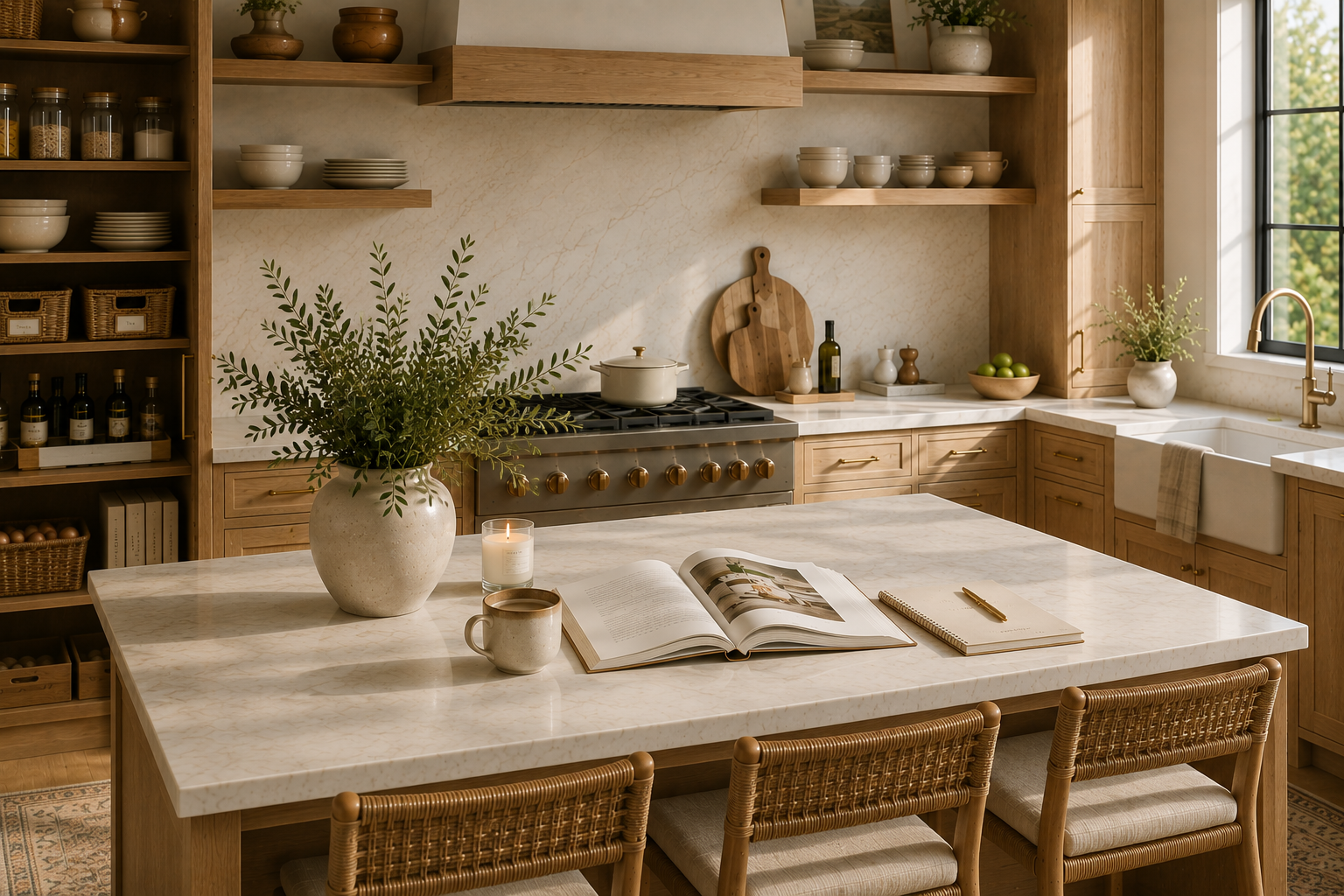

✔️ Try this Before Moving On
Before organizing anything else, fill one grocery bag with items you no longer use.
Don’t worry about making your entire kitchen perfect today.
One drawer.
One cabinet.
One shelf.
That’s all you need to begin building momentum.
💡Did You Know?
Your brain is constantly editing what your eyes see.
Research from the Princeton Neuroscience Institute has shown that when multiple objects compete for your attention, your brain has to work harder to filter out the distractions so you can focus on what’s actually important. In other words, every extra item on a crowded countertop, overfilled shelf, or cluttered cabinet creates more visual information for your brain to process—even if you aren’t consciously thinking about it. (Seidl, K., Peelen, M.& Kastner, S. 2012)
That’s one reason an organized kitchen often feels so calming.
It’s not just because it looks beautiful.
It’s because thoughtfully edited spaces reduce unnecessary visual competition, allowing your mind to focus on cooking, gathering, and enjoying your home instead of constantly filtering through distractions. (Seidl, K., Peelen, M.& Kastner, S. 2012)
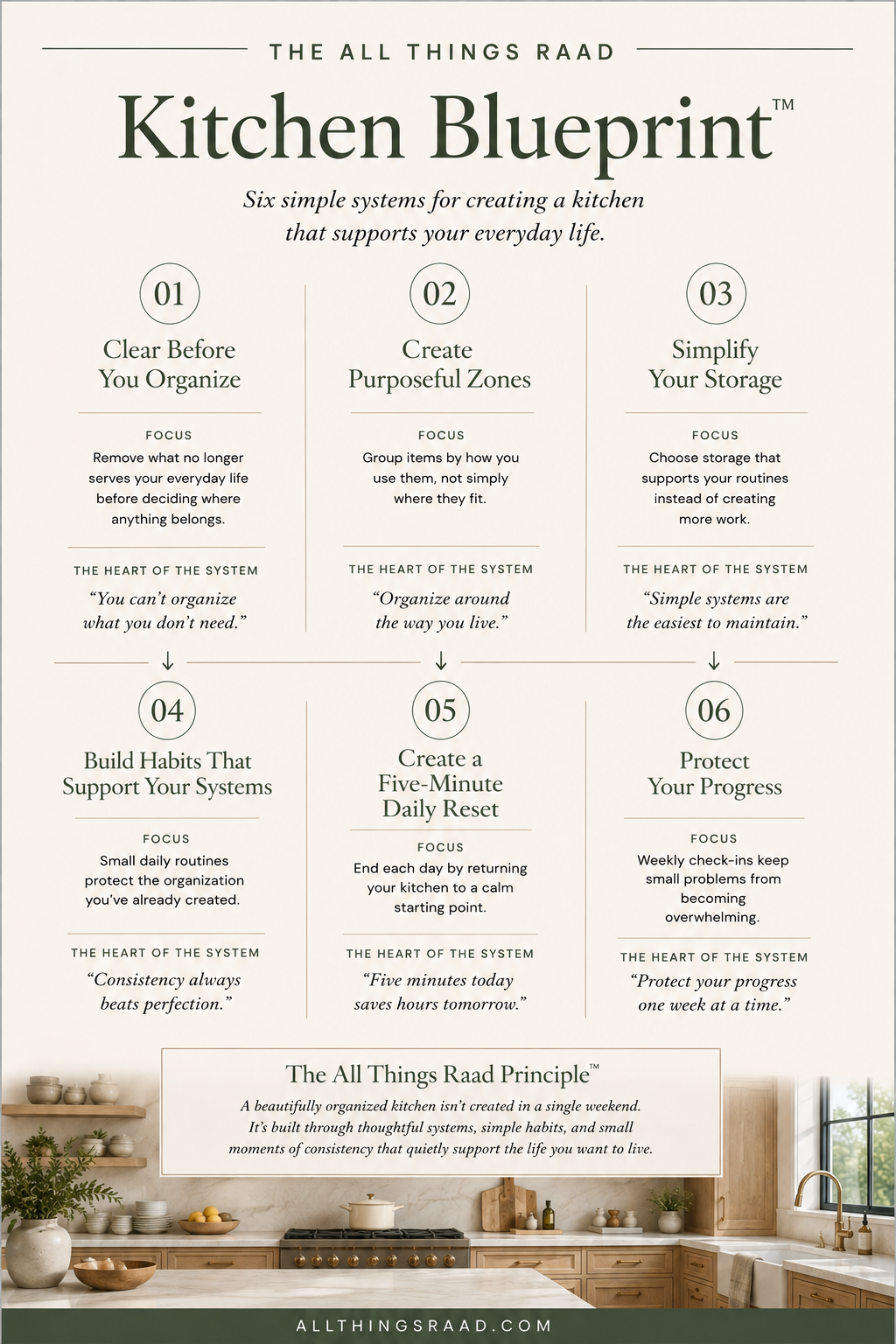
The All Things Raad Kitchen Blueprint™
A simple system for creating a kitchen that’s easy to organize—and even easier to maintain.
☕ From Gretchen :
For a long time, I believed an organized kitchen meant having the right containers, the perfect pantry, or beautifully labeled cabinets. I thought if everything looked organized, it would naturally stay that way.
What I eventually realized was that organization isn’t something you create once—it’s something you support every day.
The kitchens that feel peaceful aren’t necessarily the biggest or the most expensive. They’re the ones built around the people who use them. They reflect everyday routines, simple habits, and thoughtful decisions that make life just a little easier.
Over the years, I’ve learned that some of my favorite moments happen in the kitchen. It’s where mornings begin with a quiet cup of coffee, where conversations unfold while dinner is cooking, where holiday recipes are passed down, and where ordinary Tuesdays somehow become memories worth keeping.
That’s why I believe organizing your kitchen isn’t really about creating perfect cabinets or beautifully styled shelves.
It’s about creating space for the life that happens inside them.
If this article encourages you to clear one drawer, simplify one cabinet, or create one new habit that makes your home feel a little calmer, then you’ve already made meaningful progress.
Remember, your home doesn’t need to be perfect to support the life you want to live.
It simply needs systems that make caring for it feel a little easier each day.
Thank you for spending a few moments here with me. I hope this kitchen becomes more than just another room in your home—I hope it becomes a place where simple routines, meaningful conversations, and everyday memories come together.
With gratitude,
Gretchen
THE ALL THINGS RAAD
PRINCIPLE
A simple philosophy to carry with you.
——————————————————————————
An organized kitchen isn’t created by perfectly
arranged cabinets or matching containers
It’s build through thoughtful systems, simple habits,
and small decisions repeated over time.
When your kitchen is designed to support the way you truly live,
caring for it becomes less about keeping up—and more
about creating a home that welcomes you back every day.
——————————————————————————
— Gretchen Raad


I only recommend products I personally use, genuinely love, or would happily recommend to family and friends. Some links may be affiliate links, which means I may earn a small commission at no additional cost to you.
Thank you for supporting All Things Raad.
🤍
Gretchen’s Picks
Tools that support the systems—not create them.
A thoughtfully organized kitchen doesn’t require expensive products. These are a few tools I genuinely love because they make simple systems easier to maintain.
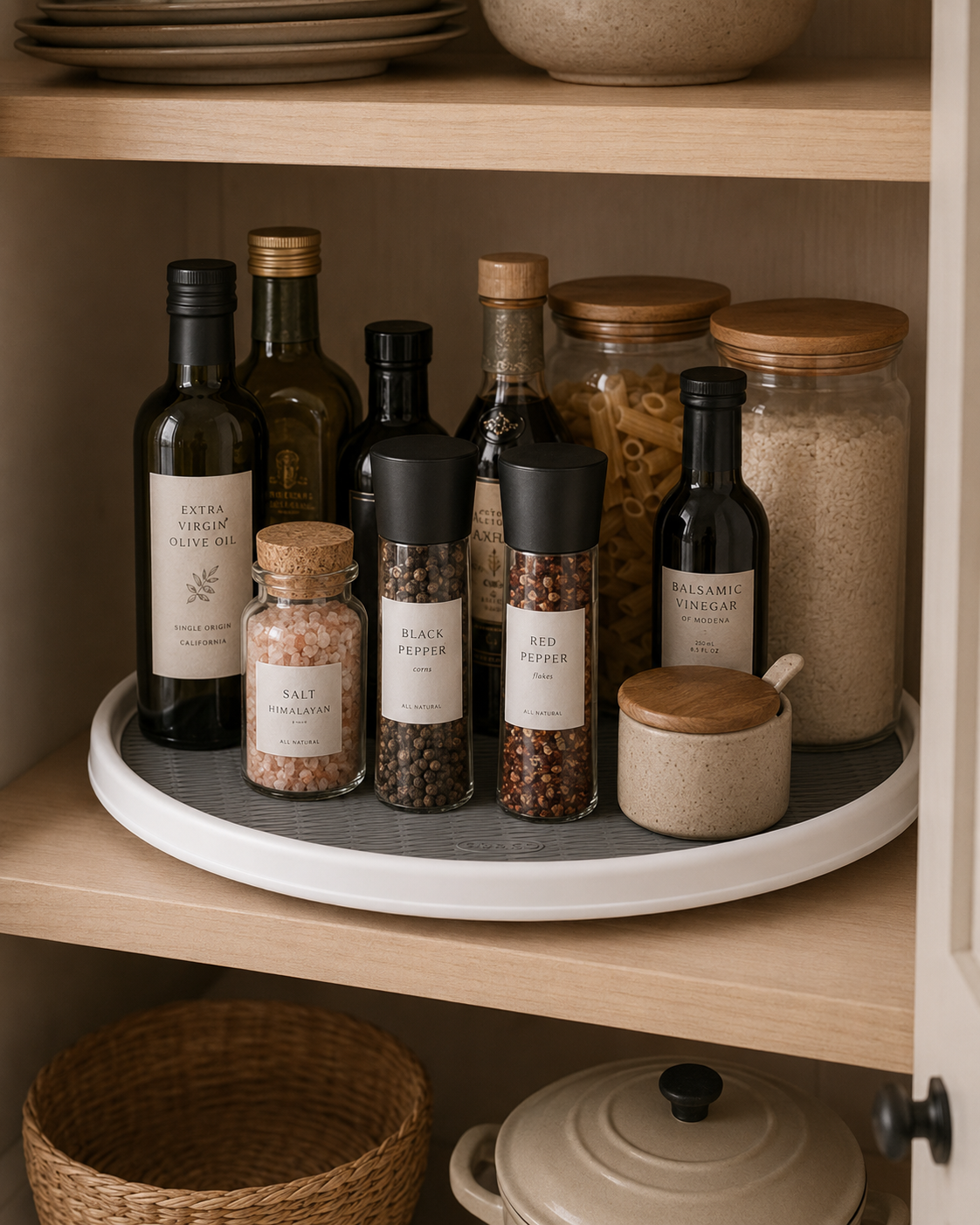
Turntable (Lazy Susan)
Supports System 2:
Creating Purposeful Zones
One of the simplest ways to make deep cabinets and pantry shelves much more functional. A quality turntable keeps everyday ingredients visible and within easy reach, so you’re no longer searching behind rows of forgotten items. It’s a small upgrade that makes your kitchen feel more organized every single day.
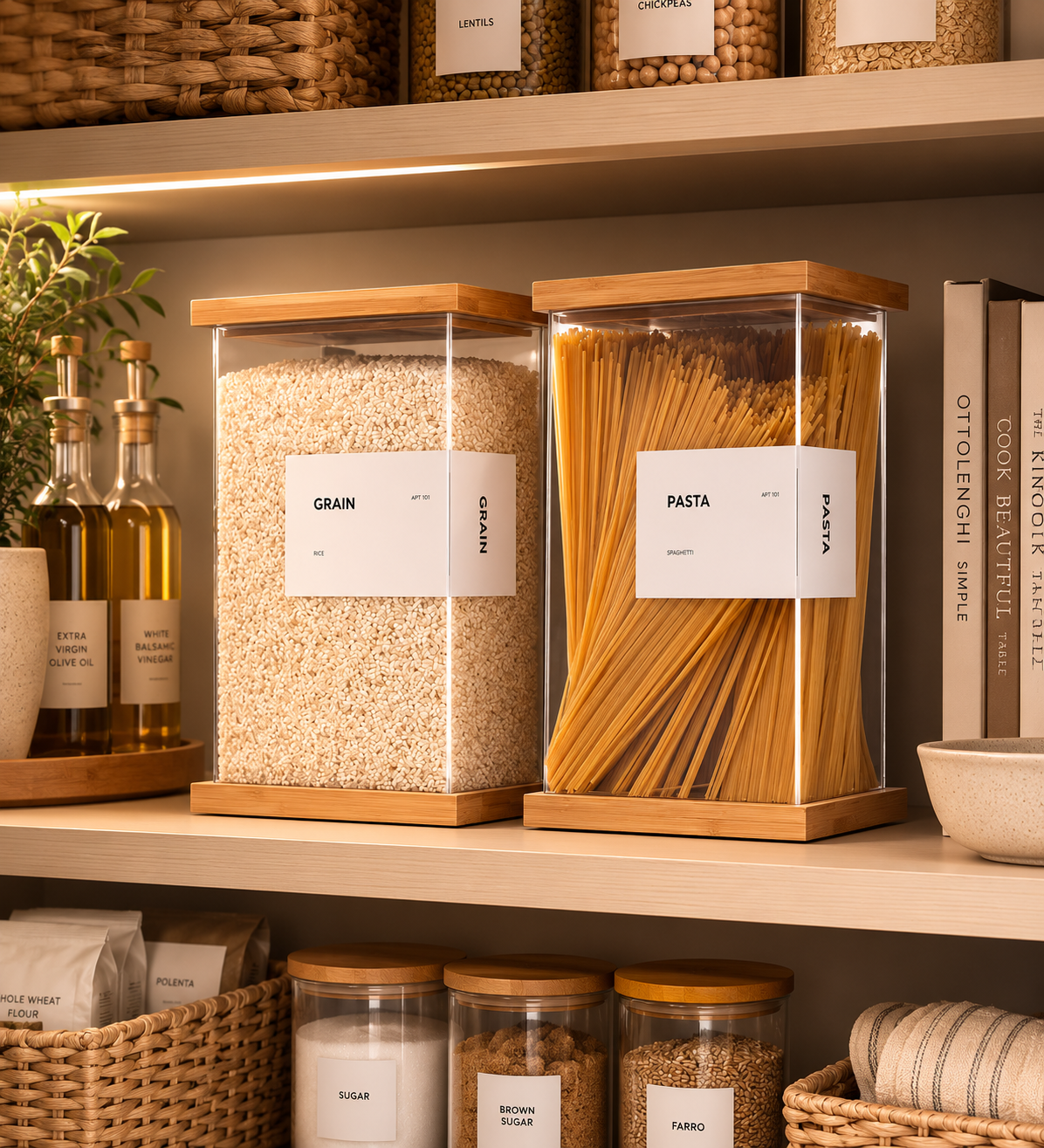
Pantry Storage Containers
Supports System 3:
Simplify Your Storage
Matching Pantry containers aren’t about creating a picture-perfect pantry—They’re about making everyday staples easier to see, stack, and access. They help reduce visual clutter while keeping ingredients fresher and your shelves more organized.
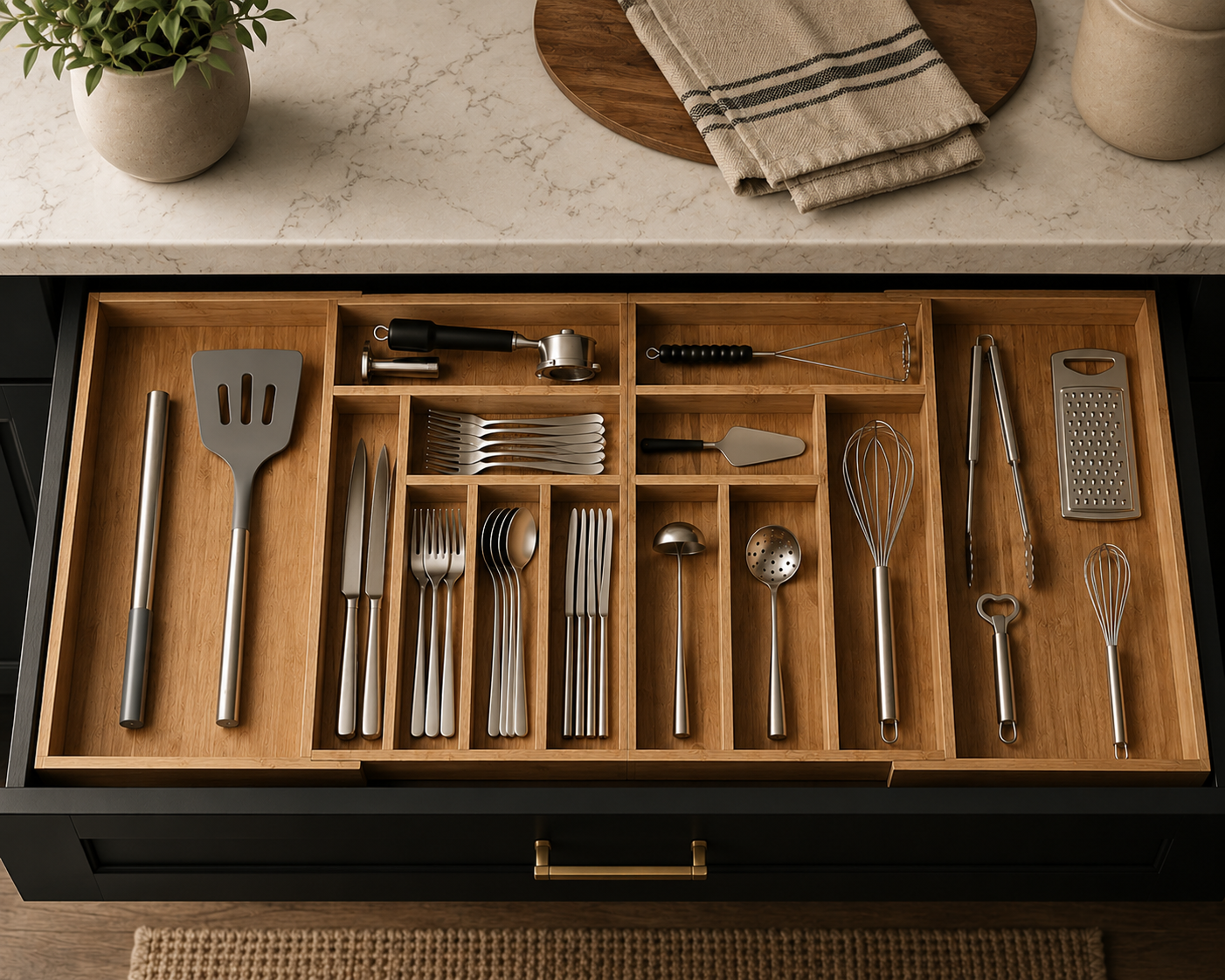
Bamboo Expandable Organizer
Supports System 2:
Creates Purposeful Zones
A well-designed drawer organizer gives every utensil a dedicated home, making cooking and cleanup noticeably easier. It’s one of those simple system that helps keep you kitchen organized without requiring extra effort to maintain.
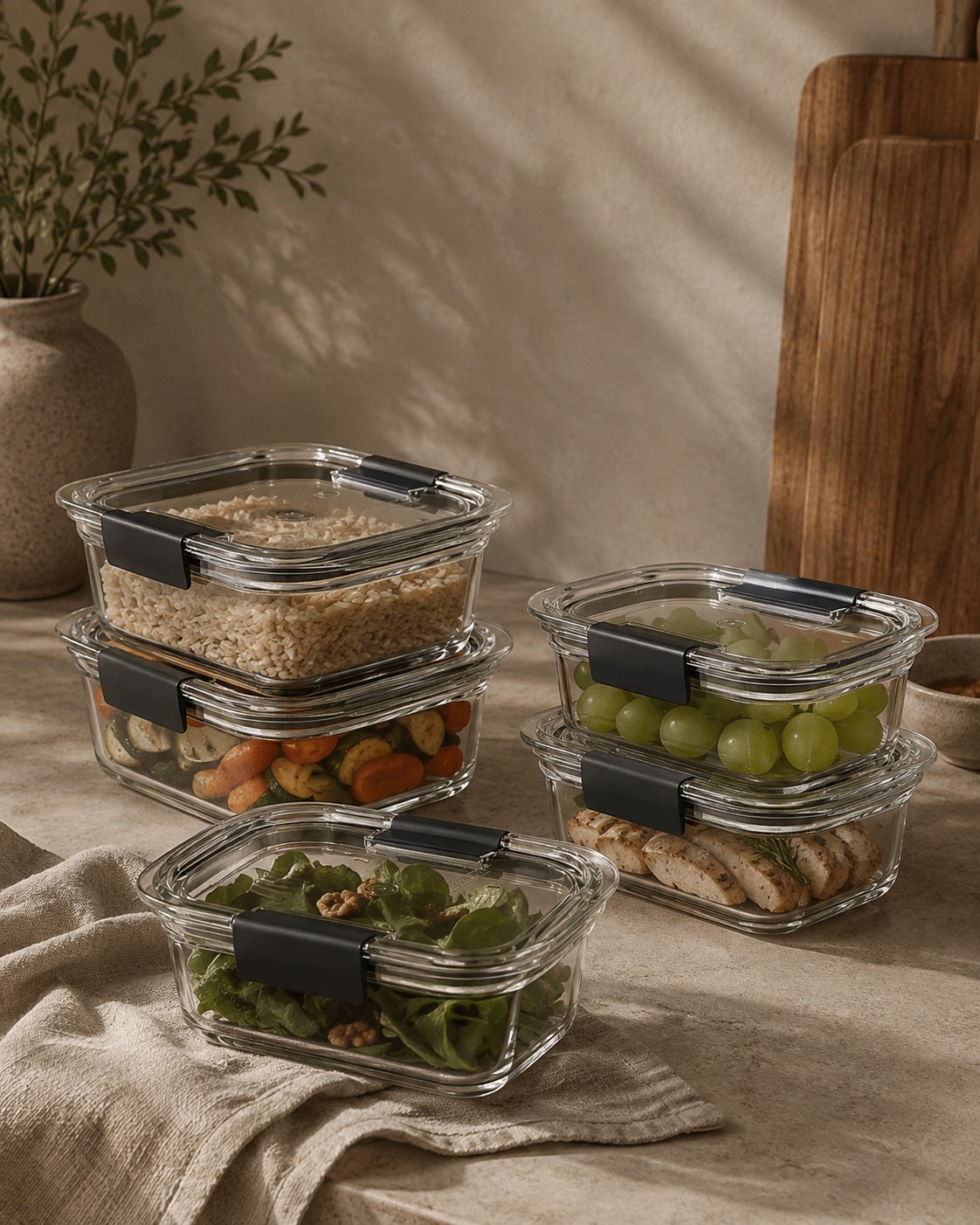
Glass Food Storage Containers
Supports System 5:
Create a Five-Minute Daily Reset
A matching set of glass containers makes leftovers easier to store, refrigerators easier to organize, and a meal cleanup more efficient. They’re durable, stack neatly, and encourage the daily reset that helps your kitchen stay organized long after the initial decluttering is finished.
Continue Your Home Journey
Every organized home is built one simple system at a time. If today’s article inspired you, here are a few resources to help you continue creating a home that feels calmer, more functional, and beautifully lived in.
If You’re Ready to Declutter Your Entire Home…
How to Declutter Your Home Without Feeling Overwhelmed
Discover a step-by-step approach that helps you make steady progress without the pressure of trying to organize everything at once. It’s the perfect next read if you’re ready to create calm beyond the kitchen.
Looking for Quick Wins?
15-Minute Decluttering Wins That Make a Big Difference
You don’t need an entire weekend to create an organized home. These simple projects can be completed in just a few minutes and are designed to build momentum one small victory at a time.
Build Habits That Last
Daily Habits That Keep Your Home Organized
Organization isn’t about starting over every weekend. Learn the simple daily routines that protect your progress and help your home stay organized with less effort.
Ready for a Complete Home Reset?
The Complete Home Reset Planner
If you’re ready to go beyond organizing a single room, my Complete Home Reset Planner will walk you through a simple, whole-home system designed to help you declutter with confidence, build sustainable routines, and create a home that truly supports the life you want to live.
Frequently Asked Questions
Kitchen Organization Questions, Answered
Whether you’re organizing your kitchen for the first time or refining systems you’ve already created, these are some of the most common questions homeowners ask. I hope these answers help you feel confident as you continue creating a kitchen that supports your everyday life.
This introduction softens the transition from the editorial article into the SEO-focused content, making the FAQ section feel like a natural continuation rather than an afterthought. I actually think this small touch will help preserve the premium reading experience you’ve worked so hard to create.
1. What is the best way to organize a kitchen?
The best way to organize a kitchen is to begin by decluttering items you no longer use, then create purposeful zones based on how you cook and live. Store everyday essentials where they’re easiest to reach, simplify your storage solutions, and build small daily habits that make it easy to maintain your systems over time.
2. How do I keep my kitchen organized after I declutter?
Long-term organization comes from consistent habits rather than occasional deep-cleaning projects. A simple five-minute daily reset and a brief weekly check-in can help prevent clutter from returning and keep your kitchen functioning smoothly throughout the year.
3. Should I buy organizing products before I declutter?
No. It’s always best to declutter first. Once you’ve decided what you’re keeping, you’ll have a much better understanding of what storage solutions, if any, you actually need. Buying organizers too early often leads to spending money on products that don’t fit your space or your routines.
4. How do I organize a small kitchen with limited cabinet space?
Small kitchens benefit from thoughtful organization even more than large ones. Focus on keeping only what you regularly use, grouping similar items together, maximizing vertical storage, and assigning every item a dedicated home. A well-organized small kitchen often functions better than a larger kitchen filled with unnecessary clutter.
5. What kitchen items should I declutter first?
Start with duplicate utensils, chipped dishes, expired pantry items, unused gadgets, travel mugs you never reach for, old food storage containers without matching lids, and specialty appliances you haven’t used in the past year. If an item no longer supports the way you cook today, it may be time to let it go.
6. Are pantry containers really worth it?
Pantry containers can be helpful, but they aren’t the reason a kitchen stays organized. Their greatest benefit is improving visibility, creating consistent storage, and keeping frequently used ingredients fresh. They’re most effective when they’re supporting an already well-organized system.
7. How often should I reorganize my kitchen?
A complete reorganization shouldn’t be necessary very often if your systems are working well. Instead, aim for small weekly check-ins, seasonal pantry clean-outs, and occasional adjustments as your family’s needs change. Organization is easier to maintain through small, consistent habits than by starting ov
8. What is the secret to keeping a kitchen organized?
The real secret isn’t perfection—it’s creating systems that fit your daily routines. When every item has a home, your storage supports the way you cook, and you build simple habits like daily resets and weekly check-ins, organization becomes something you naturally maintain rather than constantly restart.
Research & References
This article was thoughtfully researched using evidence-based studies, neuroscience research, professional organizing principles, and trusted home management resources. While the systems shared throughout this guide reflect my own experience and philosophy, the following organizations and publications helped inform the research behind this article.
Princeton Neuroscience Institute
Research exploring attention, visual processing, and how the brain filters competing visual information, helping explain why thoughtfully organized spaces can feel calmer and easier to navigate
Seidl, K. N., Peelen, M. V., & Kastner, S. (2012). Neural evidence for distracter suppression during visual search in real-world scenes. Journal of Neuroscience, 32(34), 11812-11819. https://doi.org/10.1523/JNEUROSCI.1693-12.2012
National Eye Institute
Research examining how visual clutter influences the brain’s processing of information, supporting the connection between organized environments and improved visual focus
Consumer Reports
How to Organize Your Kitchen: A little clutter control makes meal prep go a lot more smoothly.
Rogers, C., & Hart, R. (2021). Home and the extended-self: Exploring associations between clutter and wellbeing. Journal of Environmental Psychology. 73. https://doi.org/10.1016/j.jenvp.2021.101553.
Continue Exploring: Trusted Resources
If today’s article inspired you, these trusted resources offer additional research, organizing ideas, and practical guidance to help you continue creating a home that supports your everyday life.
NAPO Get Organized Blog
A collection of thoughtful articles exploring organization through the lens of behavioral science, productivity, and real-life routines. It’s an excellent resource if you enjoy learning the “why” behind organizing systems.
National Institutes of Health – Building Healthy Habits
Although focused on overall wellness, this NIH resource offers practical insights into how habits are formed and maintained—principles that apply just as much to caring for your home as they do to caring for your health.
Homes & Gardens – Kitchen Organization & Storage
If you’re looking for practical organizing ideas paired with timeless kitchen design inspiration, Homes & Gardens offers expert advice on everything from pantry organization and cabinet storage to maintaining beautiful, functional kitchens. Their articles combine professional organizing strategies with thoughtful design principles that complement the philosophy of creating a home that’s both practical and enjoyable to live in
Before You Go…
Organizing your kitchen isn’t about creating a space that looks perfect for one afternoon. It’s about building simple systems that make everyday life feel a little easier, a little calmer, and a little more enjoyable.
Start with one drawer.
One cabinet.
One small habit.
Progress has a way of growing when you give yourself permission to begin.
I’ll be cheering you on every step of the way.
Join The All Things Raad Letter
A calmer home starts with simple, intentional habits.
Twice each month, I share thoughtful home inspiration, practical organizing ideas, seasonal home care reminders, and exclusive resources designed to help you create a home that feels beautifully lived in—not perfectly maintained.
Whether you’re organizing one drawer, refreshing an entire room, or building lasting routines one small step at a time, I’d love to encourage you along the way.
Inside each issue, you’ll receive:
- Practical home organization ideas you can use right away
- Seasonal home care reminders and checklists
- Exclusive articles and behind-the-scenes content
- Early access to new planners, guides, and resources
- Thoughtful encouragement to help you create a home you truly enjoy living in
Join thousands of homeowners creating homes with intention—one simple system at a time.

Your space shapes your life.
Clarity, balance, and intentional living.
inspired by places near and far.
Design through discovery.
What I bring home from Everywhere.
Simple ways to make life easier.
Smart Systems. Better Living.
Less Cluster, more function
Gather, cook, and live well.
everyday moments, done beautifully.
A home that supports how you feel.
Design that feels as good as it looks
Timeless style, real-life function.
Spaces designed for how you live.
What you’ll find around here


Shop the Raad Edit
GRETCHEN'S PICKS
Thoughtfully selected pieces I actually use, recommend, and trust — designed to simplify your home and elevate your everyday living.
The Raad Edit


The 30-Day Home Reset Starter Guide: A Downloadable Guide to Declutter your Space & Simplify your Life.